Social listening tools in 2026 and the facebook ads price behind them
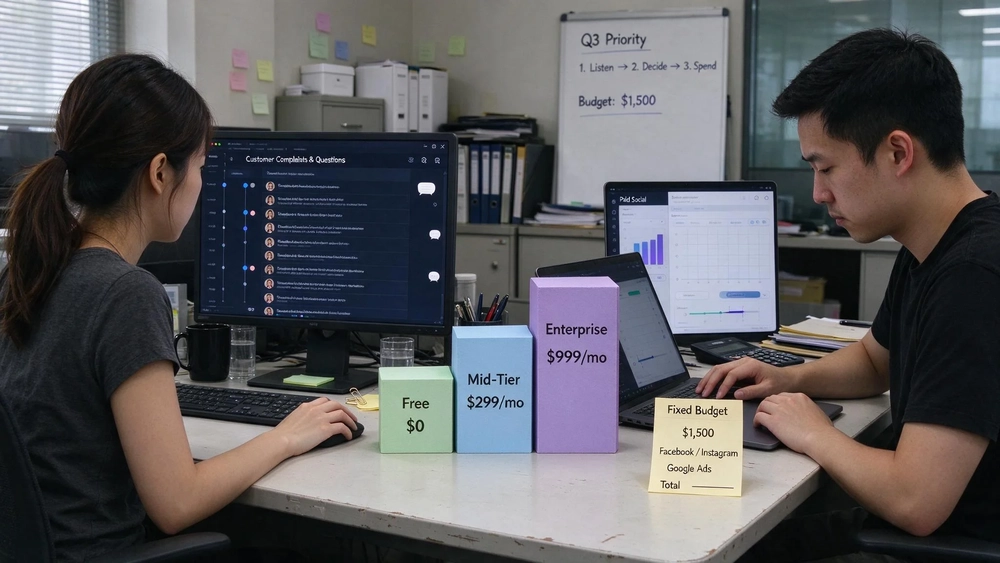
The brief lands on a Thursday from a marketing manager who runs a two-person desk: complaints about a delivery fee keep surfacing in a Facebook group, and the board wants to know whether to answer them with a campaign or with a better product page. Social listening tools in 2026 are priced by how much conversation they watch and how many people need to look at it, so a small business can start on a free plan while an enterprise suite reaches four figures a month. Both sides of that brief cost money, because a finding acted on with paid media carries a second price: the facebook ads price of the campaign itself.
As of November 2026, HubSpot's round-up of the category runs from free plans to enterprise suites, with a long middle of all-in-one platforms. The number that matters more is adoption: 62% of marketers use social listening tools, so a brand that only monitors its own inbox is comparing itself against competitors already reading the wider conversation.
Key takeaways
- Pricing in this category runs from free plans to enterprise suites at around $250–$900 per month, and the gap is mostly data volume and reporting, not features you would notice on day one.
- All-in-one platforms such as HubSpot, Sprout Social and Hootsuite bundle publishing with listening, which suits a small team that cannot run two separate subscriptions.
- Listening only pays back when the insight becomes an action; for many SMEs that action is a paid Meta campaign, and a managed package is quoted separately from the tool itself.
- A boosted Instagram post and a managed campaign are budgeted differently, and one of them will not tell you the click price until you have already spent.
What the 2026 tools cost, band by band
HubSpot's list splits roughly into three groups. The all-in-one management suites start at $800 per month for HubSpot Marketing Hub, $199 per user/month for Sprout Social and $99 per user/month for Hootsuite. Budget tools sit well below them, with free tiers from Buffer and Metricool. Enterprise listening suites such as Meltwater, Brandwatch, Sprinklr Insights and Onclusive price by quote after a demo.
The bands reflect what each product watches. A budget tool tracks mentions on the networks you connect, and the facebook ads price is the media budget you add separately once a finding turns into spend. Brandwatch aggregates brand mentions from 100M+ sources. Meltwater reads social platforms alongside news sites, blogs and forums. The difference between a $99 seat and an enterprise quote is the width of the net, and the reporting that turns a wide net into something a board will read. Neither band includes the facebook ads price of acting on what you find.
| Band | Typical entry price | What it watches | Fits |
|---|---|---|---|
| Budget and free | Free to about $99 per user/month | Connected profiles, mentions and comments | Teams testing whether listening is worth the effort |
| All-in-one management | $99 to $800 per month | Mentions plus publishing, inbox and reporting | SMEs that want one login for social work |
| Listening specialists | Quote on demo | Web, news, forums, podcasts, multilingual | Brands with media and PR exposure |
| Enterprise intelligence | From $250–$900 per month upward | Many channels, AI analysis, share of voice | Agencies and large teams |
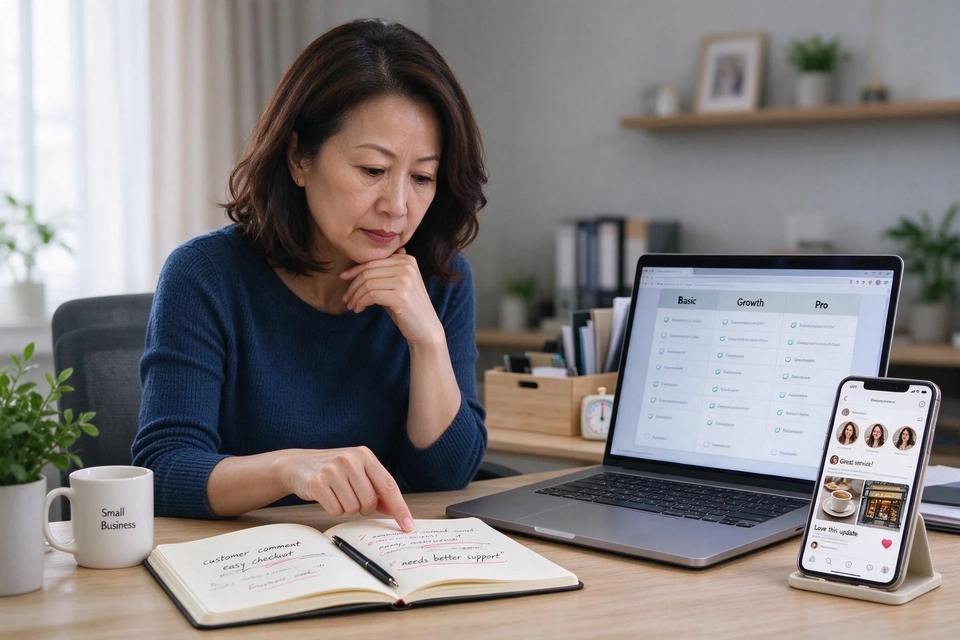
HubSpot's own advice is to upgrade only when volume grows, several people need access, or stakeholders expect professional reports. Most SMEs I have watched skip that test and buy the tier above what their mentions justify.
Matching a subscription to your actual mention volume
A small business with light volume gains very little from an enterprise suite, and a facebook agency quote for the campaign side rarely needs enterprise data underneath it. The mentions are few enough to read by hand, and the value of listening is in learning what people say, not in scale. Start free, watch for one quarter, and note which network produces the complaints that actually hurt.
The upgrade triggers are practical:
- Mentions outgrow a spreadsheet, so filtering replaces scrolling.
- More than one person needs to see and assign mentions.
- You need sentiment, competitor or trend comparisons that a free plan does not compute.
- A client or manager asks for a report you cannot assemble by hand.
Hootsuite's Streams, Sprout Social's word cloud and Brandwatch's Focus Panels each answer one of those triggers, and any facebook ads price you plan afterwards should be sized on the same volume estimate. Name the trigger before you open a pricing page, or the comparison becomes a feature list.
Where Facebook and Instagram ads fit after listening
This is where the budget splits in two, and it is the part the tool comparison tables leave out. Listening gives you a finding, such as a spike in complaints about a delivery fee. Acting on it usually means a paid campaign, and a paid campaign has its own monthly cost.
For an SME that means one of two routes. Boost the post from the platform, which is fast but leaves the targeting, budget and creative to whoever is on the account that day. Or hire a facebook agency or take a managed package, which brings strategy, account setup, banners and reporting but also a monthly fee on top of the media spend.
The click price itself is not set by the package. It moves with ad quality, campaign goal, format, industry, audience settings, competition, location, seasonality and ad position. A managed package improves the inputs you control. It leaves the market you compete in exactly as it was, and any quote that promises otherwise is guessing.
How much does it cost to boost a post on Instagram?
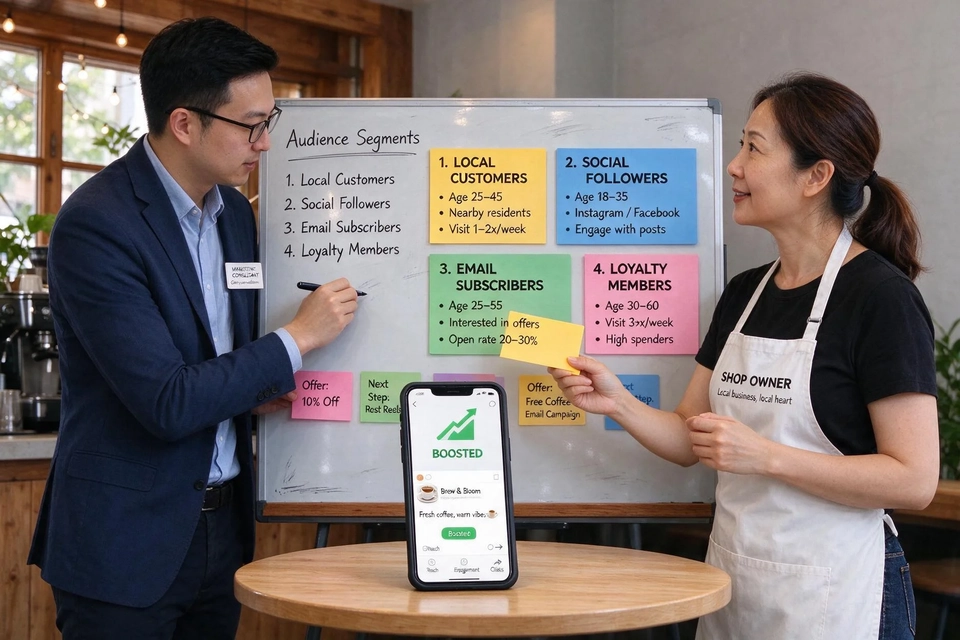
This is the question small owners ask first, and the search results for Facebook ads pricing rarely answer it. The honest answer has two parts. Boost pricing is set by the platform from your chosen budget over a chosen duration, so the spend is whatever you decide to commit; there is no fixed list price. What you cannot see beforehand is the click price you will get, because the same quality and competition factors that drive Facebook ads apply to a boosted post.
A managed campaign changes the shape of the cost rather than the click price. One published package structure prices Facebook and Instagram ads management from 220 GBP per month, a second tier from 330 GBP per month and a third from 550 GBP per month. Those fees cover campaign management for media budgets up to set ceilings, plus account creation, starter banners, monthly reports and tracking code support. Media spend is separate from the fee.
For a small owner the real choice sits between unmanaged spend and a monthly fee plus spend. Boosting is cheaper up front, and it is also cheaper to get wrong, which matters more than it sounds. A managed package costs a fixed monthly amount and adds structure that a one-person marketing desk rarely has time to build.
Is it worth paying for ads on Facebook at all?
Worth is a question about what the campaign is meant to do, and listening is what answers it. If mentions show people asking for product comparisons, a campaign aimed at that intent has a job. If mentions show nothing but price complaints, more ads will not fix it.
SEMLEADERS' guidance is that results take time. Early indicators can appear within days, but a full reading of return on investment usually needs at least a few weeks of conversion data. A brand deciding after one week is reading noise. Budget for the learning period before you judge the channel.
How to set up a first listening plus ads plan
A workable first plan for an SME with one marketer:
- Run a free or budget listening tool for one quarter and keep a weekly note of what people complain about and what they ask for.
- Pick the one finding with a clear paid answer, such as a product question that keeps coming up.
- Price both routes: the platform boost for a fixed budget, and a managed package against the media budget you can sustain.
- Set the review date before launch, at the end of the learning period the vendor's own guidance suggests, not the end of the week.
- Keep listening through the campaign, because the comments on the ads are new data the tool can read.
Teams that buy the campaign first and the listening tool second end up with spend and no evidence, which is the failure mode I see most often.

What Topkee's Meta ads work looks like in practice
Topkee's Meta ads team builds precise targeting frameworks, collects performance data and pinpoints high-value audiences for quality traffic. Those three steps are what a listening finding needs once it becomes a campaign. The service covers the campaign side of a listening finding, starting with the targeting framework and the audience work that sit between the tool's dashboard and a running ad set.
In a budget line this reads as two fees for one job: a tool that tells you what the market wants, and a team that turns it into paid media. Read more on AI-powered Facebook ads for growth and on lifting conversions with AI-managed Facebook ads.
What to watch next quarter
Two things are worth a calendar note. First, AI visibility features are entering listening tools, with Brand24 and others tracking how large language models describe and rank a brand. A tool that watches ChatGPT answers is now part of brand monitoring, not a separate purchase. Second, the conversation about listening is drifting toward AI search, which means the findings you collect on social will increasingly be compared against what AI engines say about you. If your team only checks the social inbox today, that comparison is the upgrade worth planning for.
FAQ
How much does it cost to boost a post on Instagram?
The platform takes whatever budget and duration you choose, so there is no fixed list price. What you cannot set is the click price you will get, since ad quality, competition, audience and location decide that.
Is there a rule about spreading ads across a set?
The rule many agencies quote is that no single ad in a set should take more than about a fifth of the impressions, so the set is not carried by one creative. Treat it as a rule of thumb about diversification, not a platform setting.
Is it worth paying for ads on Facebook?
It is worth it when a listening finding names a demand a campaign can answer. Expect at least a few weeks of conversion data before judging return, because a few days only show early indicators.
How can I advertise on Facebook?
Either boost a post from the page for a fixed budget, or set up a campaign in Ads Manager with defined objectives and audiences. Many SMEs hand the second route to an agency and keep boosting for day-to-day posts.
Which social listening tools suit a small team in 2026?
Start with a free plan from Buffer or Metricool, or a budget seat such as SocialBee or Hootsuite, and move up when mentions, team size or reporting needs justify it. All-in-one suites make sense when one login for publishing and listening saves more time than the price difference costs.
Sources
- Cassie Wilson Clark, "Top social listening tools of 2026", blog.hubspot.com, 2026-11-07. https://blog.hubspot.com/service/social-listening-tools
- "Facebook Ads Price List", SEMLEADERS, undated. https://semleaders.com/facebook-ads-price-list/