Kleenex's First Nations Packaging: Lessons for Video Production
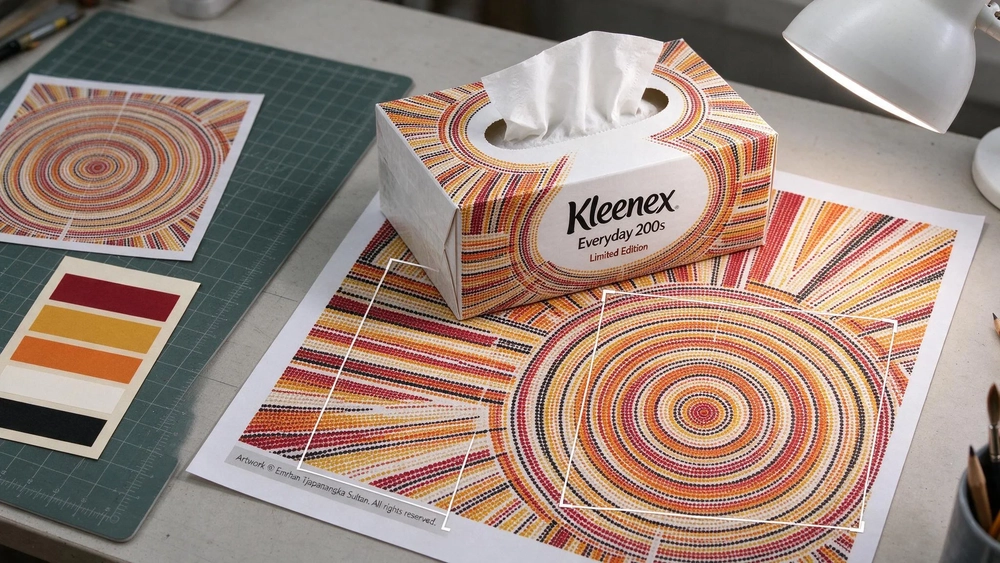
Hulsbosch, an independent strategic branding and design agency, worked with Kimberly-Clark Australia on a limited-edition packaging series for Kleenex's Everyday 200s range, announced on 4 November 2026, built around commissioned artwork by First Nations artist Emrhan Tjapanangka Sultan. Anyone choosing a video production company for a culturally sensitive launch has to check that the artwork will survive every later format the brand puts it into, not only the pack. The decisions that matter are mostly made before the shoot starts.
- The Kleenex project treated artwork placement, scaling and production constraints as design decisions, not as a final print step.
- A brand's reconciliation commitment needs a partner that documents usage rights before production starts, not after.
- Monthly creative plans suit launches that need many ad versions; a single packaging agency engagement usually does not.
- The measure of a cultural project is whether the artwork still reads as the artist's work in the smallest format it appears in.
How a branding agency translates First Nations artwork onto packaging
The brief behind the series was to move the detail and cultural meaning of Sultan's work onto a three-dimensional packaging system. Hulsbosch's team had to consider composition, structure and reproduction together, and to prepare production-ready artwork that kept the original intact at every touchpoint. Laura Howe, a senior designer at Hulsbosch, described the work as protecting the integrity of the story being told rather than applying artwork to a surface.
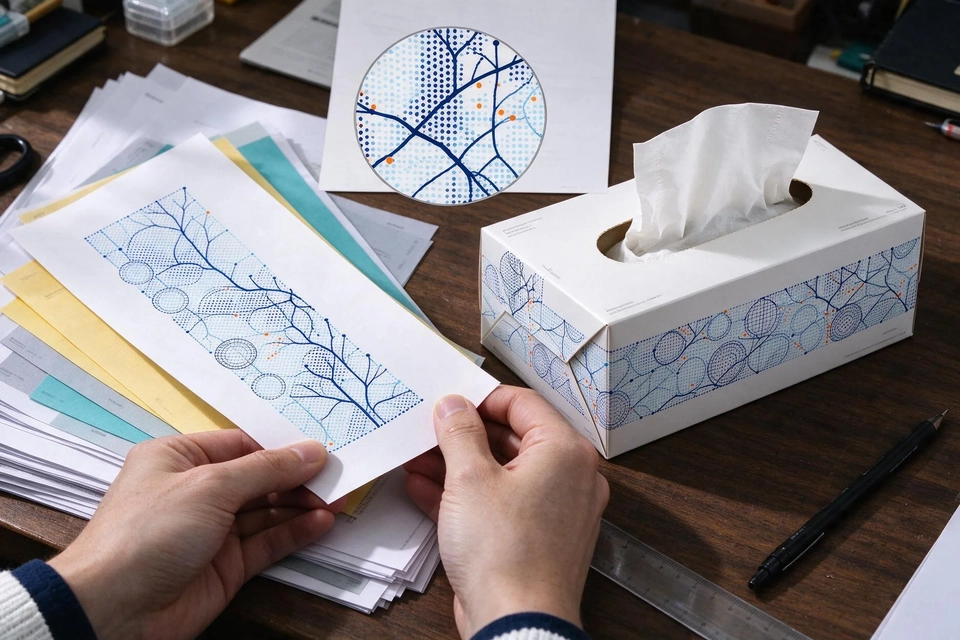
That sounds like a packaging problem, and it is one. The same reasoning applies one step later, when the finished pack becomes an image in a social feed, a short cut in a pre-roll or a still in a retail listing. Each of those formats re-crops the artwork, rewrites its proportions, then compresses whatever is left. If nobody owns that translation, the cultural weight that justified the commission quietly disappears. A video production company that treats the artwork as a cultural claim rather than a brand mark sorts out the crop and the credit line before the shoot.
The useful question in a shortlist interview is not whether the studio can make a pack look premium. It is whether the studio can show, on paper, where the artwork's focal point lands in a vertical crop and in a square crop before anything is shot. Those crop rules carry straight into paid placements: when AI-powered Google Ads campaign management puts the creative into rotation, my working assumption is that bidding cannot rescue an image nobody recognises, so the artwork has to stay recognisable first.
What a reconciliation commitment asks of a brand
The initiative sits inside Arbex's broader reconciliation strategy, which focuses on three areas: supporting First Nations STEM pathways, improving health and hygiene outcomes in remote communities, and using brands as a platform for social good. David Tyack, managing director for Australia and New Zealand at Kimberly-Clark, framed the reach of everyday products as an opportunity to create positive impact.
This matters for production planning because the commitment is public and therefore auditable. Once a brand says its products carry First Nations voices, every downstream asset becomes part of the claim. A cut-down film that crops the artwork badly, or a still that drops the artist's credit, weakens something the brand has formally said it stands for. A marketing manager who treats the reconciliation statement as a communications matter and the ad assets as a separate production job has created a gap that a critic, or an auditor, will find.
Arbex's other stated work, including support for the Aboriginal Investment Group Remote Laundries Project, shows the same pattern: practical, community-led action. Brands in Singapore and Hong Kong that make similar commitments should expect their creative suppliers to fit into that pattern rather than sit outside it. A guide to Facebook ads strategies that boost recall is a reminder that, in my reading, recall rests on creative consistency across placements, which is the same argument applied to a single artwork.
What to write in the brief before production starts
The definition comes before the design: what counts as a finished creative unit, and over what period. A brief that leaves that open lets a producer count every exported size as a new deliverable, which inflates the invoice and blurs what was approved.
Faced with a brand-asset-led launch, the brief should fix five things before anyone opens a design file:
- Asset rights. Who supplied the artwork, and what usage rights travel with it into advertising, print and third-party placements.
- The protected element. The part of the artwork that must never be cropped, covered by text or recoloured.
- Format list. Every ratio and duration the launch needs, agreed once, with each item listed rather than bundled.
- Version ownership. Who approves a language variant or a re-cut, and how many revision rounds that includes.
- Delivery and custody. Where master files and the approved-version record live, so next season's team does not rebuild from a screenshot.
That list is not bureaucratic. Each item removes a question that otherwise resurfaces late, when changes cost the most and when the person who made the original decision has moved to another project. A brand team that can point to an agreed list can also defend a decision internally after the campaign ends.
Versioning is where cultural care is usually lost
Cultural care is easiest to keep in the studio and hardest to keep in the version tree. Video ad optimization depends on that tree staying legible. A pack designed once carries the artist's intent. A campaign that spawns a hero film, several social cuts, two languages and a retail banner repeats that translation across every output, and each copy is an opportunity for drift.
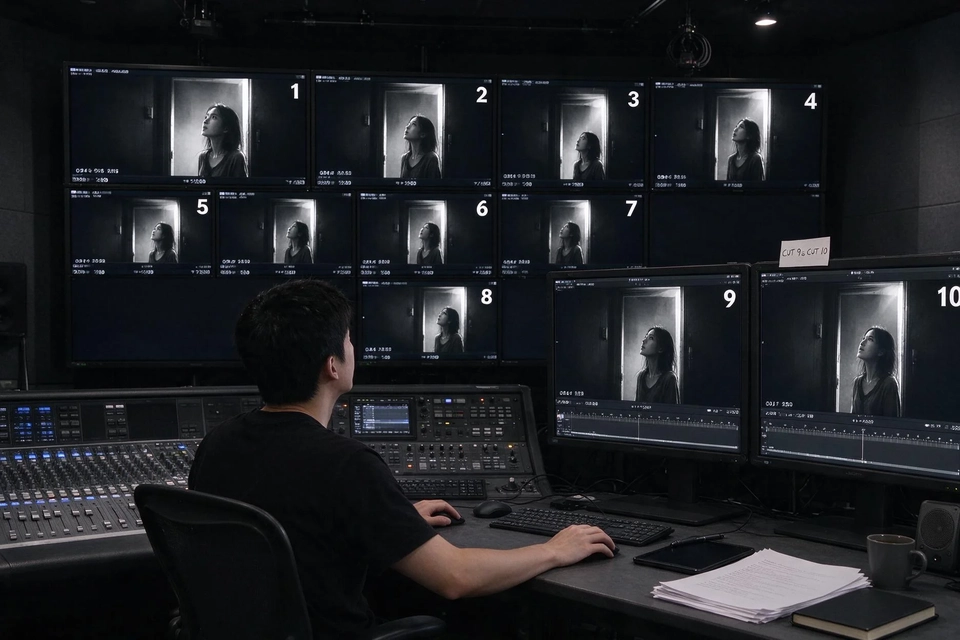
The practical control is a version list that is treated as part of the work, not an administrative afterthought. Every approved cut has a number, a ratio, a duration and a named approver. When a regional team asks for a shorter version, the list shows what already exists and who signed it off, so the new cut starts from a known point rather than from an edit someone remembers. Versioning therefore sits upstream of video ad optimization: it decides whether a test can be read at all.
You cannot test what you cannot distinguish. If several cuts of the same artwork are all called "the launch film" in the tracker, no test will tell you which treatment of the cultural asset performed better, and the next brief will be guesswork. Separate names, separate versions, one variable per test keep the comparison readable, which is what makes video ad optimization a production discipline rather than a media-buying task.
Schedule risk in a project with an approval layer
A project like this one has more decision-makers than a routine product shoot. The artist's intent, the brand's design team, the regional marketing lead and the retail partner all have a view. Each additional approver is a node where a production schedule can stall, and none of them will show up on a Gantt chart as a delay until it happens.
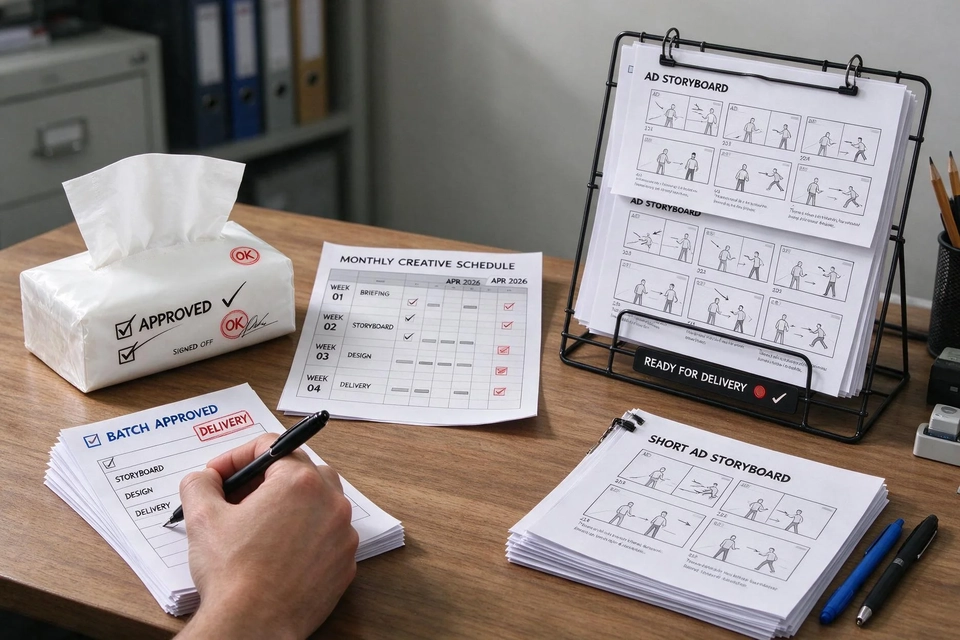
Two habits keep the schedule honest. First, agree the approval roles in writing at the start, with names rather than team labels. Second, schedule production in batches so that a late approval on one asset does not hold the whole set. The pattern echoes what monthly creative plans do: a plan for the month, priorities for the week, delivery in batches, with feedback consolidated rather than trickling in per asset.
Correlation is not causation here. A slow approval process does not by itself cause a weak campaign, and a fast one does not cause a strong one. What the record does show is that when a cultural asset is involved, the cost of a rushed decision tends to land after publication, where it cannot be edited out.
Where Topkee fits once the story needs ad creative
Topkee is a creative subscription service for advertisers and for brand or product teams with a continuous production need. For a launch of this kind its work sits after the pack rather than inside it, since its standard plans deliver online ad creative, including key visuals, short films and combined graphic-and-film sets, planned month by month and refreshed continuously. The Everyday plan costs S$590 per month; the Advanced plan costs S$980 per month. Each plan is delivered monthly and lets the brand choose one of its combinations, and the options are alternatives for the month rather than cumulative.
Films on the standard plans run up to 15 seconds, with size, language and revision rounds confirmed before the service starts. One key visual means one finished design under one theme; exporting extra sizes does not create new units. Those definitions matter to anyone comparing quotes, because they make the count verifiable.
For a brand with a limited edition on the shelf, the adjacent use is the launch's online ad creative: the pack photography turned into key visuals and short films for paid placements. Topkee does not produce packaging or print, and the company's documented work does not include the Kleenex series. A brand can, though, brief a monthly creative plan to carry a commissioned artwork across its ad formats once the pack is signed off, with the artwork supplied under agreed usage rights and the brand's own approval roles written into the plan. If the launch needs more than a standard plan allows, an enterprise creative plan is quoted on request and fixes brand scope, deliverables, derived versions and delivery batches before work begins.
A short comparison of two buying decisions
| Packaging or branding agency | Monthly creative subscription | |
|---|---|---|
| Typical job | One-off, high-complexity design and production | Recurring ad creative in agreed formats |
| Volume | Fixed per project | Defined monthly combination |
| Version control | Project files handed over | Version list and approved versions kept for review |
| Best fit | A heritage, culturally sensitive surface | The campaign that promotes it |
| What to check | Rights and cultural sign-off | Deliverable definitions and revision rounds |
A brand picks the monthly plan rather than the one-off studio when its recurring ad output in the launch window runs well past a single campaign, as the cosmetics case below sets out against the one campaign every eighteen months.
The two are not substitutes. A brand that buys the first and assumes it covers the second ends up briefing a pack studio for social cuts, or a creative subscription for structural design neither is set up to do.
Single-asset projects versus a monthly plan
The measure here is volume, counted two ways: campaigns per year, and assets per launch. A brand with one campaign every eighteen months is at the bottom of that range, and a launch that needs a dozen ad formats inside a few weeks sits at the top. Set that definition before the quote, not after it.
A small case makes the tension concrete. Suppose a cosmetics brand runs a heritage edition once a year, with a guest illustrator, four markets and a three-week window between sign-off and launch. That is one campaign per year and four market versions of each asset — a count the brand can put on paper. Under a single-asset engagement the brand pays for one complete production cycle, then has nothing in place when the artwork needs a second language or a re-cut for a new placement.
Under a monthly plan with the same amount of work, the brand can spread the launch assets across a planning month, keep a version list, and carry approved files into the next season's plan. The trade-off is commitment: a monthly plan assumes recurring output, and a brand with one campaign every eighteen months will pay for capacity it does not use. The decision follows from volume, not from taste.
A useful rule for the video production company shortlist is to ask how each candidate would count the job. A partner that returns a deliverable definition and a version plan is answering the question the brief actually asked.
FAQ
Does a packaging design agency cover the campaign's video ads?
Usually not. Production of advertising key visuals and films is a separate scope, with its own formats, approval rounds and version records. Brands should confirm which partner owns which stage before the pack is signed off.
How should a brand brief a partner on a commissioned cultural artwork?
Supply the artwork with its usage rights stated, name the element that must stay intact, list every format the launch needs, and agree revision rounds and approval roles in writing. Those four items remove most late-stage disputes.
What does one key visual mean in a monthly creative plan?
One completed design under one theme. Exporting the same design in other sizes does not create new units, so a brand should agree upfront how many distinct themes it needs, not how many files.
Why does version naming matter for ad testing?
Because a test needs one variable. If two treatments of the same artwork share a name in the tracker, the result cannot be attributed to either one, and the next brief loses the evidence it was meant to gain.
Is a monthly creative plan suitable for a one-off limited edition?
It suits the launch period if the brand expects a steady stream of ad creative in that window. A brand with a single campaign and no ongoing promotion requirement is usually better served by a scoped project quote.
Sources
- Ricki Green, "Hulsbosch brings cultural storytelling to life through limited-edition Kleenex range", Campaign Brief, 2026-11-04. https://campaignbrief.com/hulsbosch-brings-cultural-storytelling-to-life-through-limited-edition-kleenex-range/
- "Good Creative, Keeps Happening", Topkee, n.d. https://www.topkee.com.sg/creative-service