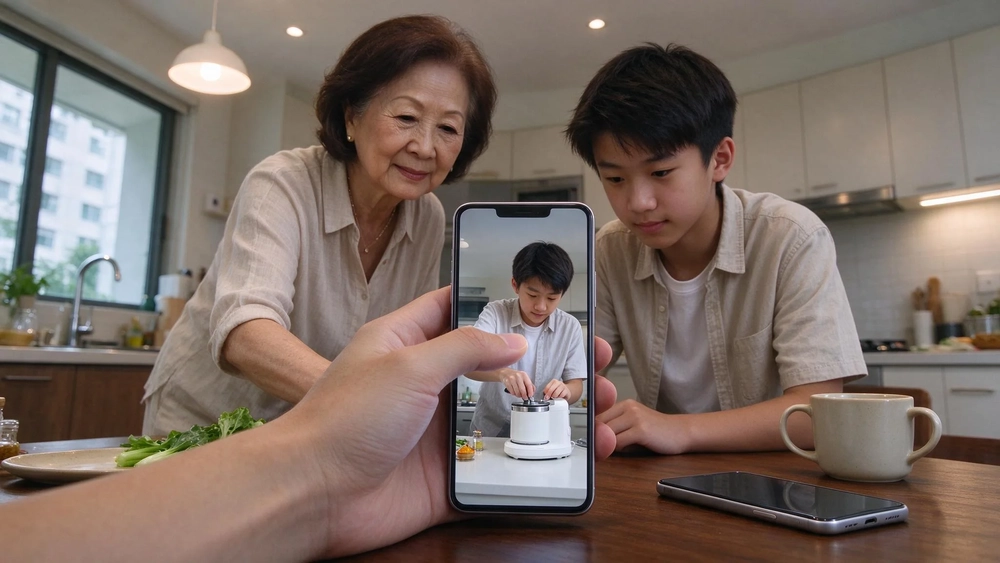
Short-form video in 2026: hooks, retention and Facebook ads
As of November 2026, a short video stands out when it opens on the product or the problem within the first second, makes one point, is framed for a phone, and ships in enough versions that paid budget can move behind the ones people finish. Retention drives distribution on every major platform, so the choices below serve watch-through rather than production polish. Budget for testing belongs in the plan as well: teams that compare the facebook ads price with the cost of shooting extra clips usually find the media budget is the tighter constraint.
Key takeaways
- 62% of U.S. adults count short-form video among their preferred content formats, ahead of text at 42% and long-form video at 40%.
- The preference holds from 18 to 64 years old, so the format is not limited to the teenage audience.
- The practical runtime is 15-30 seconds; a platform may accept up to 60 seconds, but completion decides distribution.
- Captions lift completion by 20-30% on average, and a cut or visual change every 3-5 seconds keeps the pace.
- Creative volume and creative fatigue matter more than a single polished clip, because paid budget needs several versions to test.
Table of contents
- Why short video still wins attention
- The length that completion rate supports
- Building the opening second
- Cutting for the sound-off viewer
- Scripting before you shoot
- Vertical first, everywhere
- Where paid distribution takes over
- What a creative subscription does about the volume problem
- A 30-day test you can run
- FAQ
Why short video still wins attention
Statista's consumer research puts short-form video at the top of content preferences: 62% of U.S. adults name it among the formats they prefer, against 42% for text and 40% for long-form video. The same survey found that preference across every age group it measured, 18 to 64 years old, which weakens the common assumption that short video belongs to one generation.
Pew Research Center's survey of U.S. teens points the same way at the youngest end of the market. 97% of teens report using the internet daily, 61% use TikTok every day and 55% use Instagram every day, while 36% say they use at least one of the five major platforms almost constantly. A brand that wants a daily habit has to show up in the format that carries the habit.
The audience is wider than the stereotype
For a Singapore SME selling to households, the age spread changes media planning more than the platform choice does. The preference for short video reaches into the 18 to 64 band, so the question is which subject and pacing suits each segment, not whether the format is worth the effort. A clip built for a first-time buyer and one built for a repeat customer can share the same runtime and still need different openings, different proof and different offers.

The length that completion rate supports
OpusClip's analysis of Snapchat Spotlight states the trade-off plainly: the platform accepts clips up to 60 seconds, but performance concentrates in the 15-30 second range. The reason given is retention. A short clip that most viewers finish signals quality to the recommendation system, while a long clip that people abandon early signals the opposite, whatever its production value.
The same arithmetic applies on Reels, Shorts and TikTok, where ranking weighs watch time and completion. The denominator in a completion rate is your runtime, so stretching a single point to fill a longer slot reduces the share of viewers who reach the end. A tight fifteen seconds can beat a loose minute even when the longer cut carries more information.
When a shorter cut is the better call
Some subjects need less than fifteen seconds. A single product transformation, a price reveal or a punchline works at the length of the payoff plus a second of context, and padding it dilutes the moment. The test is whether every shot would survive on its own; the shots that fail can go, and the clip gets shorter without losing the point.
Where the ceiling sits
The 60-second limit is a ceiling, not a target. Longer slots suit a demonstration with several steps or a story with a payoff that needs setup, and they only work when each segment could hold attention by itself. A team that cannot say why a clip needs the extra time should cut it.
Building the opening second
Most guides say to hook early without saying what a hook does. On a phone feed the viewer decides in the time it takes a thumb to move, so the opening frame has to show the product, the problem or the result, and any on-screen text has to name the payoff. Movement or an unexpected visual buys the next moment.
The scripting consequence is that the opening gets written first and shot first. The rest of the clip then exists to deliver what the opening promised. When the promise needs a sentence of explanation before it makes sense, that sentence belongs in the middle of the clip, not in front of the hook.
Cutting for the sound-off viewer
Much of the feed is watched with the sound off, which makes captions part of the edit rather than an accessibility afterthought. OpusClip reports that captions lift completion rates by 20-30% on average, and it recommends a cut, a camera change or a visual transition every 3-5 seconds to maintain momentum. Those two numbers set a working cadence for the edit: something changes at that interval, and the text stays on screen long enough to read.
Captions, margins and brand consistency
Captions carry more than the words. The subtitle position and the safe margins differ from horizontal video, so a team that reuses a horizontal template finds text under the platform interface or outside the visible frame. Brand fonts and colours help here: a subtitle style fixed in advance keeps a series consistent, and a multi-language version becomes a swap rather than a redesign.
Scripting before you shoot
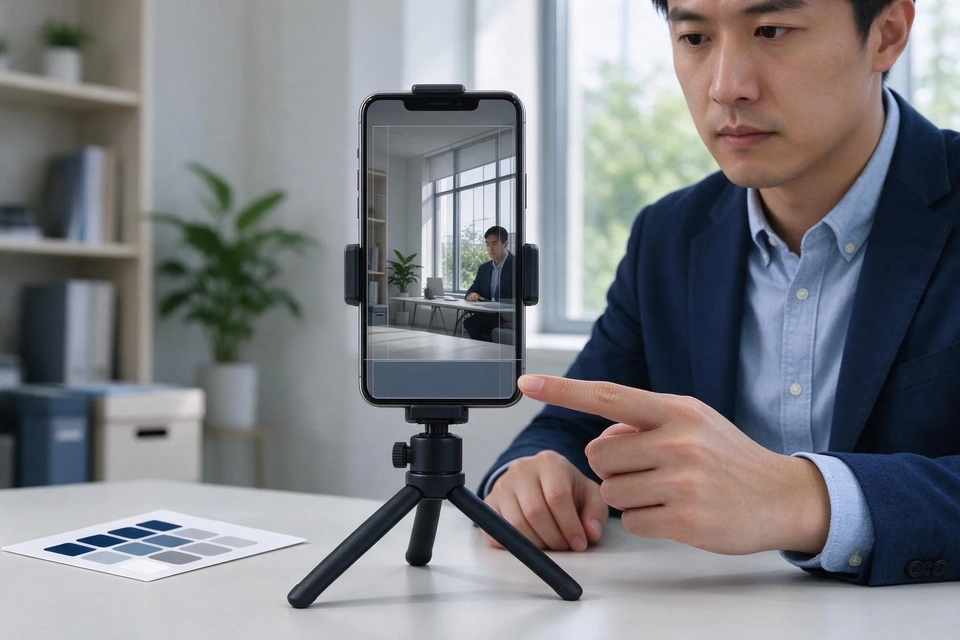
A script turns an idea into a production file. In Topkee's description of video script creation, the script is structured into opening, development, climax and conclusion, with the visual content, the sequence and the subtitles or narration specified for each part. That structure gives everyone in the room one reference point, so a review comment lands on a section instead of on the whole clip.
Short video compresses the structure rather than discarding it. The opening carries the hook, the development carries the single selling point, and the conclusion carries the call to action. A fifteen-second clip has room for those three beats and little else, which is why choosing the one point comes before writing a line of narration.
Vertical first, everywhere
Short video platforms are built around a vertical, full-screen frame, and a horizontal clip dropped into that feed looks small and easy to scroll past. The frame also changes the craft: the subject has to be composed for a narrow screen, text has to sit inside the safe area, and the shot has to survive a caption bar near the bottom.
Shooting vertical by default now pays twice, because the same file gets reused on websites, in email and in paid placements. Teams that shoot horizontal and crop afterwards lose the composition they planned and often the top of the subject with it. The practical rule is to design for the phone and let the wider placements adapt the vertical master.
Where paid distribution takes over
Organic reach shows which clips hold attention; paid distribution decides how many people see them. On Meta, a Reels ad inherits the rules of the organic clip: the opening frames carry the hook, the caption carries the message for sound-off viewers, and the landing experience has to match the promise. A facebook agency earns its fee at this point by converting a handful of organic winners into a tested set of placements, audiences and offers instead of boosting every post.
The cost side deserves a spreadsheet. The facebook ads price a team pays reflects auction competition, audience size and creative quality, so a clip that holds attention lowers the cost of each view and each enquiry. Judging creative and media separately hides that link, and it is the link that decides whether more clips or more budget comes next.
Creative fatigue is a schedule, not a surprise
A clip that worked three weeks ago can stop working while the audience stays the same size. Creative fatigue is the normal end of a short video's useful life, and the teams that plan for it refresh on a cadence instead of waiting for a drop. A facebook agency that plans the refresh keeps a library stocked with several variants per theme, which gives the media buyer something to swap in, and a tracking link by theme and medium shows which variant still earns its place.

What Topkee Media does about the volume problem
Topkee's answer to the volume problem is a monthly creative subscription built around a 15-second short-form video: each clip runs fifteen seconds or less and carries one core selling point. The standard plans include a film-only option of four or eight clips a month, and a mixed option trades some clips for key visuals. Production follows a defined sequence from script to shoot to edit, with subtitles, voice-over and music finishing each piece, and the output is adapted to the placements a client actually buys.
Topkee Media pairs that production line with Reels video ads and ad creative optimization. The Reels work covers visual demonstrations of a product's features, real customer reviews, continuing storylines and behind-the-scenes material, while the optimization side monitors creative fatigue, tests variants and syncs changes to the ad platforms in one action. Tracking links let a team compare clips by theme and medium, then move budget toward the selling points that keep performing. The subscription supplies testable material on a schedule; the outcome still depends on the offer and the follow-up after the click.
A 30-day test you can run
The plan below changes one variable a week, so a team can tell which change moved completion. Set the facebook ads price for the test against the cost of another shoot before the first week, and the month has a budget rather than an intention.
| Week | What changes | What to watch |
|---|---|---|
| One | Rewrite the opening of the three best posts and shoot the hook first | Completion rate on the opening frames |
| Two | Cut each clip to one point and keep the runtime inside 15-30 seconds | Average watch time |
| Three | Add captions and a visual change every 3-5 seconds | Completion against week one |
| Four | Move budget behind the two strongest clips and pause the rest | Cost per enquiry |
Before the first shoot, it helps to know what the audience already says about the category, and a review of social listening tools shows how teams collect that signal without guessing. Scheduling discipline matters as much as the edit: the roundup of social media tools that keep a posting rhythm covers the calendars and queues that make a series possible.
A checklist for the month:
- One selling point per clip, written before the shoot.
- The hook shot first and placed in the opening frame.
- Captions checked on a phone with the sound off.
- A variant ready for every clip that goes into paid.
- Cost per enquiry reviewed weekly, not cost per view.
FAQ
How long should a short-form video be in 2026?
On most platforms, 15-30 seconds gives the best balance between a complete point and a high completion rate. A platform may allow up to 60 seconds, but the longer slot only helps when each segment holds attention on its own.
Do captions really improve completion?
OpusClip reports an average lift of 20-30% in completion when captions are added. The gain comes from viewers watching with the sound off and from text that gives the eye something to follow between cuts.
Is short video only for younger audiences?
No. 62% of U.S. adults rank short-form video among their preferred formats, and the preference appears across the 18 to 64 age range that Statista surveyed. Teen usage is higher in frequency, not unique to the format.
How many versions should we test before increasing spend?
Enough that the comparison means something. Two or three distinct openings per theme, each with one clear difference, give a media buyer a real choice; more variants than the budget can feed produce noise rather than a decision. A facebook agency or an in-house team can run that comparison, provided the clips differ in one variable at a time.
Can one vertical clip work on every platform?
The frame travels, but the finish does not. Each platform places its interface over the video, so safe margins, caption position and the opening seconds need checking in the placement where the clip will run.
Sources
- Hannah Macready, "How to make short-form videos that stand out in 2026", Hootsuite Blog, 17 November 2026. https://blog.hootsuite.com/short-form-video/
- "Reelified: Americans Prefer Short-Form Video", Statista, chart accessed 17 November 2026. https://www.statista.com/chart/36430/preferred-content-formats-in-the-united-states/
- "Teens, Social Media and AI Chatbots 2025", Pew Research Center, 9 December 2025. https://www.pewresearch.org/internet/2025/12/09/teens-social-media-and-ai-chatbots-2025/
- "The Ideal Snapchat Spotlight Length & Format for Retention", OpusClip Blog, accessed 17 November 2026. https://www.opus.pro/blog/ideal-snapchat-spotlight-length-format-for-retention

Article Author
Pang Sir
You might also like

Cut Your Wasted Ad Spend Now
Discover how durable YouTube creator content delivers sustained marketing value and improves your marketing ROI

How Did Vatti Turn Xiaohongshu Users Into Kitchen Co-Creators?
Vatti moved from advertising to co-creation by using Xiaohongshu, Rednote Ads and creator recruitment to rejuvenate its kitchen brand.
