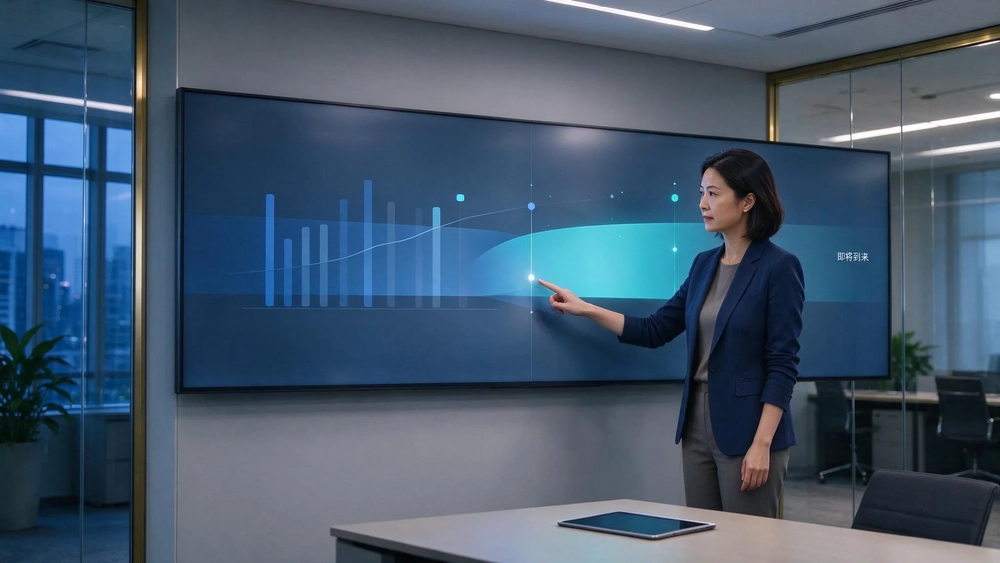
Google's December 2026 Core Update: What to Do First
Google has told site owners what its next broad search update will change, so the useful question for a Singapore team is a sequence question: what to finish, what to wait for, and what to fix before the next rollout starts. As of November 2026, the December 2026 core update has been announced but not released. The work that pays now is to read November's results properly, annotate the dates in Search Console, and brief any seo consultant you engage on that order rather than on an estimate of where a page will land.
- Google announced the December 2026 core update on 24 November 2026 and says it is scheduled to be released in December 2026.
- The stated focus is how its systems understand and rank relevant content, including longer and more complex questions, and personalised results for people with personalisation on.
- Google's general core update guidance still applies, including waiting at least a full week after an update completes before analysing a site.
- The order of work matters more than the speed, because the review window for November and the release window for December overlap.
What changed, and when does the December 2026 core update start?
Google's Search Status Dashboard carried the notice on 24 November 2026, and the entry says the update is scheduled to be released in December 2026. It was posted as a pre-announcement, so no part of the rollout has started, and Google gave neither a start time nor an expected duration.
What the entry does describe is the target. Google says the update brings improvements to how its systems understand and rank relevant content, including longer and more complex questions, and to personalised results for people who have personalisation turned on. The scope covers every location and language where Google Search is available, and Google points to its general core-update guidance.
The timing is the part a Singapore team should notice. The notice appeared about an hour after Google marked the November core update complete, as Search Engine Journal reported on 24 November 2026. A site that has not yet looked at its November results now has a second update in the queue within weeks.

Why did Google announce this update before the rollout?
Core updates are broad reassessments of how Google's systems rank content rather than penalties aimed at particular sites. Google's core update documentation, read this week, describes them as changes that keep results helpful and reliable as the web itself changes, applied to the systems as a whole rather than to single pages.
Announcing early has a practical value. Earlier notices this year gave a rollout window, and November's added the scope. This one also states the focus, which lets a site owner prepare an assessment instead of guessing at one after traffic moves.
The personalisation element deserves its own line. Google's help page on differing results explains that people see different results because of time, location, language, device and personalisation, and that personalisation can reorder individual results or whole content blocks. A screenshot from your own signed-in browser is therefore weak evidence of a ranking, and a report built on one is weaker still.
Who in a Singapore marketing team does this affect?
Start with any site whose enquiries, bookings or sales begin with a Google search. For a Singapore SME in professional services, home services, education or healthcare, organic search often carries enquiries that paid media cannot buy at the same volume, which makes a core update a revenue question as much as a marketing one.
In a larger team the work lands on whoever owns the website and its content, usually a marketing manager rather than a developer. The first week should produce a short list of page-level questions, not a rebuild request, and some teams hand that analysis to an seo marketing agency with a brief rather than a wish list.
Not every company needs to act. A business that sells only through paid channels, an app with no indexable pages, or a firm whose search traffic is a rounding error can read the announcement and wait. This advice is for sites with meaningful organic traffic and someone accountable for it.
When the December 2026 core update rolls out, and what to do between two updates
The awkward part of this pair is that the review window for November and the release window for December overlap. Google recommends waiting at least a full week after a core update completes before analysing a site in Search Console, then comparing that week with a week before the rollout began. If the next update starts inside that week, a comparison may mix the effects of two changes.
The discipline that keeps the picture readable has two parts. Mark both dates in Search Console with custom annotations, so a later chart shows which line belongs to which update, and fix the measurement conditions by using the same engine, country, language and device for every comparison, because Google's results differ by all four. Keep the two questions apart as well: what did we change, and what did the ranking do. A page that moved in the same week as a content edit and a core update cannot tell you which one did it.
What you should not do is hold every improvement until the uncertainty clears. Changes that stand on their own evidence, such as fixing a broken template or rewriting a thin service page, are worth making whenever they are ready. Google notes that some changes take effect in a few days, while confirming a site-wide improvement can take several months, so a queue that waits for a quiet month rarely moves.
For a site still reviewing November, finish that review first and treat December as a second measurement point rather than a reason to stop. A seo consultant who starts with those dated comparisons is easier to judge than one who starts with a list of changes.

What should you do now, in order?
- Confirm that November's core update has finished. Check the Search Status Dashboard and write down its start and end dates. Result: one line that every later comparison can point to.
- Annotate both dates in Search Console. Mark the November completion now and add December's start date once it is posted. Result: a chart that separates the two events.
- Wait a full week before you analyse. Google recommends at least a full week after a core update completes, then a comparison of that week with the week before the rollout began. Result: a comparison window the rollout itself has not disturbed.
- Review your top pages and queries one by one. A small drop, such as moving from position 2 to 4, needs no drastic action, and Google advises against changing content that already performs. A large drop, such as moving from position 4 to 29, calls for a deeper assessment of the page and of the site as a whole. Result: a short list split into leave alone, investigate and rewrite.
- Check the technical basics before you touch the copy. Crawl errors, pages blocked in robots.txt, missing or duplicated titles, slow templates and broken internal links explain a share of sudden drops, and many are fixed in days. Result: a technical list you can finish this month.
- Match each remaining question to the page that should answer it. A question about which contractor to hire belongs on a service page with scope, area and an enquiry route. A comparison question belongs on a comparison page, and a preparation question belongs on a process page with a checklist. Result: fewer pages doing more work.
- Decide what to brief an agency with. Bring the annotated dates, the page list and the technical findings, and ask how each item will be checked. An seo marketing agency that proposes work before asking for those is guessing.
What does Topkee's SEO work check after a core update?
Topkee (Topkee Pte. Ltd., Singapore) runs SEO as a six-step sequence rather than a set of one-off fixes, which is what turns a core update into a workable event instead of a scare. The first step builds keyword clusters from the way buyers move from understanding to comparing to buying, with a tracked list per keyword and a page mapped to each cluster. The second checks indexing, site structure and page content for anything that stops search engines understanding the page or visitors using it, and the third improves titles, content hierarchy, service information and internal links so the page answers the customer's question more fully.
The later steps are the ones a core update tests. Content is planned against search demand and competitor gaps rather than volume alone, and rankings are observed by agreed engine, region, language and device so that a single appearance in the top ten stays separate from a sustained position. Each cycle ends with a review of completed work, ranking movement and available site data before the next priorities are set. Question-style demand is mapped to the page type that answers it, with a which-provider question on a service page, a comparison question in comparison content and a preparation question on a process page with a checklist.
Topkee SEO also keeps the limits visible. Its keyword difficulty assessment uses five factors and states that the result is not an official search-platform score or a probability of success, and the service page says search rankings, AI recommendations and sales are not unconditionally guaranteed. For a team preparing for December, that is the honest frame: a method that lowers the risk of avoidable losses, without a promise about where a page will land.
What to watch next?
Watch the Search Status Dashboard for the start and end of the December rollout. The end date matters as much as the start, because Google's advice to wait a full week begins when the rollout completes rather than when it begins.
Watch whether the stated focus holds. Google said the update improves understanding of longer and more complex questions and of personalised results, and both are testable on your own pages: a long question where your page is thin, or a query that changes when personalisation is on.
Watch the November material if you have not finished with it. The reading guide to the November 2026 core update and the analysis of that update's ranking volatility are better used before December's numbers arrive than after.
If you plan to outsource the work, ask the seo marketing agency how it will annotate and compare the two rollouts. For a Singapore team the next decision is whether your measurement is clean enough to tell you what happened, so set the annotations before the first chart lands.

FAQ
Is the December 2026 core update live yet?
No. Google posted it as a pre-announcement on 24 November 2026 and says it is scheduled to be released in December 2026, so there is no rollout to measure until the dashboard shows a start.
Should I change my site before it rolls out?
Only where the change stands on its own evidence. Wait a full week after November's update completes, compare that week with the week before the rollout began, and act on what the comparison shows. A fix for a blocked page does not need to wait for either update.
How long before I know whether a change worked?
Google says some changes can take effect in a few days, while confirming a site-wide improvement can take several months. Judge page-level fixes first, and expect a site-level conclusion later.
Why do my results differ from a colleague's?
Google explains that results differ by time, location, language, device and personalisation, and that personalisation can reorder results or whole content blocks. Comparing screenshots from two signed-in browsers is not a ranking test; compare a fixed engine, region, language and device instead.
Do I need a seo consultant for a core update?
Not always. With clean data and someone able to act on it, the sequence above is enough. A seo consultant earns the fee when the site carries technical debt, unclear page ownership or no capacity to analyse and fix in the same month.
Sources
- "Google Announces December 2026 Core Update Ahead Of Rollout", Search Engine Journal, 24 November 2026. https://www.searchenginejournal.com/google-december-2026-core-update/598760/
- "Incident details: Preannounced the December 2026 core update", Google Search Status Dashboard, 24 November 2026. https://status.search.google.com/incidents/AXrqxXXdtSjj3672ux7X
- "Google Search's core updates and your website", Google Search Central, accessed 27 November 2026. https://developers.google.com/search/docs/appearance/core-updates
- "Why your Google Search results differ from others", Google Search Help, accessed 27 November 2026. https://support.google.com/websearch/answer/12412910