
Google Ads Adds Commercial Exemptions for US Election Ads
As of November 2026, Google has written a commercial exception into its US Election Ads rules: an advertisement that shows a current officeholder or candidate only as the face of a legally established government programme, or only as a business owner or licensed agent selling a product, no longer needs US Election Ads verification. Google's notice, posted on November 16, 2026, says the Political content policy will be updated in November 2026 so that those commercial exemptions are stated plainly. Anyone buying Google Ads through a sem agency should read the change as a definition, not a permission slip: the exemption depends on what the ad says about the person's office, party or campaign.
Key takeaways:
- The exemption covers two situations only: promoting a government programme, product or service, or presenting the person as an ordinary business owner, employee or agent selling something.
- One direct or indirect reference to a political party, the political office or a campaign puts the ad back under US Election Ads verification.
- The rule sits in the United States section of Google's political content policy, and it does not loosen Singapore's own political advertising restrictions.
- Google's published review time for a resubmitted ad is 1 business day for most ads, which sets the realistic pace for fixing a flagged campaign this week.
What changed, and the date it applies from
Google posted the update notice on November 16, 2026. The notice is short and precise about its own scope: in November 2026 the company will change the Political content policy under the United States election ads heading so that commercial exemptions are clarified. The same notice states the test in one sentence. An ad that features a current officeholder or candidate solely in connection with a legally established government programme, or as a commercial employee or agent offering products or services for sale, and without reference to political office, party or campaign, is exempt from US Election Ads verification.
That wording matters more than the headline. Google is codifying an exception advertisers have argued for, and tying it to the content of the ad rather than the identity of the advertiser. A retailer is not exempt because it sells things; its ad is exempt only while the person appears in a commercial capacity and the script stays away from politics.
The policy page already carries a section headed Commercial exceptions to US Election Ads. It lists the same two routes: a legally established government programme, product or service, and a candidate or officeholder acting strictly as a business owner, employee or licensed agent selling a tangible product or service. Both carry the same bar on references to a party, the political office or a campaign.
Until the policy text changes, the safe reading is the one the page already gives: both routes exist, and the bar on political references applies to each. An advertiser, or a sem agency acting for it, can point to the notice, but should test the creative against the policy page as it stands.
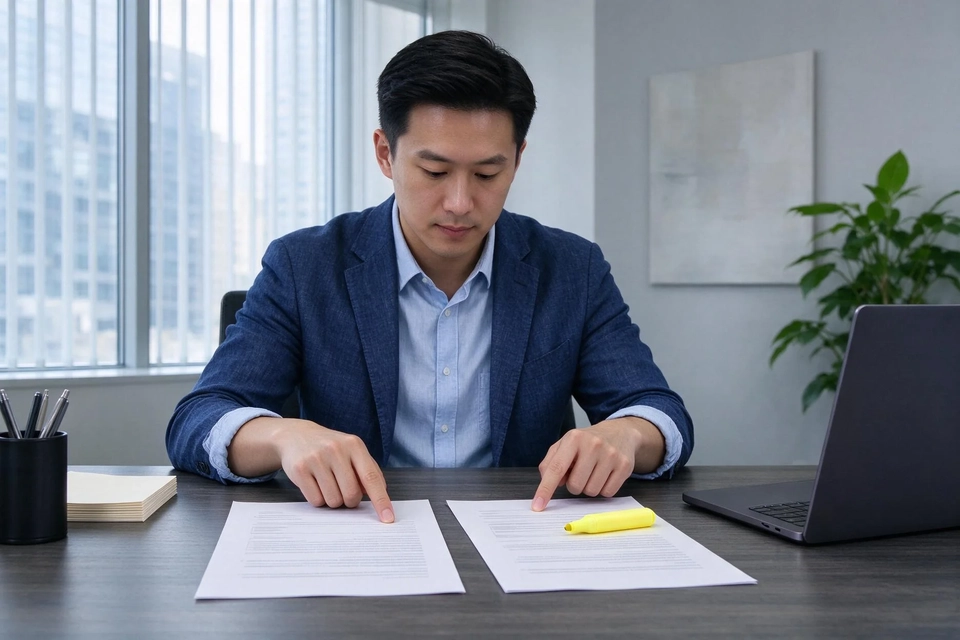
Why Google drew the line there
Election ad verification answers a funding question: it tells viewers who paid for a message that asks for a vote, and gives regulators a record. A message that sells insurance, or explains how to claim a public health scheme, does not raise that question, even when the person in the frame holds office.
Google's policy already separates political content by region. The United States block is one of several regional sections, each with its own verification process and its own list of what counts as an election ad. The commercial exception keeps verification for ads that do argue about politics while removing a step for ads that merely borrow a familiar face.
For a sem agency reading the notice, the useful part is the second sentence. The exemption turns on whether the ad carries a political reference, direct or indirect; intent and budget size do not decide it. That gives a reviewer something concrete to check and an advertiser something concrete to fix when an ad is rejected.
The distinction blurs in production. A caption that thanks a minister for attending a launch, a stock shot of a parliament building, or a party colour scheme are all indirect references under the policy's wording.
Who it affects in a Singapore marketing team
Three groups feel this change, and they sit in different parts of the same team.
The first is anyone running United States targeted campaigns from Singapore. A regional team that manages a US launch out of a Singapore office inherits the rule even when the billing entity, the creative team and the target market sit elsewhere. Location decides which verification process applies, so a Singapore entity still completes the US process for the region the ad targets.
The second is the agency side. A sem company singapore that manages accounts across markets has to keep the United States section of the policy next to the Singapore section, because the two do not read alike. In Singapore, Google prohibits ads that influence the outcome of a presidential or parliamentary election, a by-election or a referendum, ads that sway public opinion on race or religion, and ads that push for a change in the law. Nothing in the US commercial exception touches those rules, and an ad that clears Google in the United States can still be barred in Singapore.
The third is the person who signs off creative. The exemption is decided at the level of the ad, not the account, so whoever approves the final copy keeps the campaign inside it, and needs the two conditions in writing rather than a summary of the news.
The change does not reduce the verification burden for a genuine election ad. Google's policy says non-compliance with its political content rules may lead to information about the account and its political ads being disclosed to regulators.
How to tell a commercial exception from a political ad
The test is content, so read the ad as a stranger would. Use the table below as a first pass on any ad that features a current officeholder or candidate, and send anything in the right-hand column to a lawyer or to Google's review.
| What the creative shows | Inside the commercial exception | Outside it |
|---|---|---|
| The person's role | Business owner, employee or licensed agent | Candidate, party leader, campaign surrogate |
| The subject | A government programme, or a product or service for sale | A policy argument, a vote or a campaign promise |
| The words | Product features, opening hours, how to apply | Vote, re-elect, support, campaign, party name |
| Party markers | None | Party logo, party colour, campaign slogan |
| The office | Not mentioned | Named, implied or used as an endorsement |
If the ad would make sense with a different person in the frame, it is probably commercial. If it only makes sense because of who the person is in politics, it is not.

What to do this week, in order
- List every US targeted campaign whose creative shows a person who holds or seeks office, for the live account and for the creative library that feeds it. A flagged ad is often a retired one that someone republished.
- For each ad, write down the two conditions: is the person there for a government programme or a product, and does the copy name a party, an office or a campaign. A written answer per ad survives an audit.
- Remove indirect references before resubmission. Party colours, slogans, office titles in the headline and footage of a campaign event are the usual offenders.
- Check the account's verification status before the next launch rather than after a disapproval. Account history belongs with the advertiser when the account is opened in the client's name.
- If an ad is disapproved, edit it and resubmit it for review. Google says most resubmitted ads are reviewed within 1 business day, and some take longer when the review is complex.
- If the ad uses synthetic or digitally altered imagery, video or audio, declare it in the campaign settings. Google says it will issue a warning at least 7 days before suspending an account over that policy.
A small case, and the metric that decides it
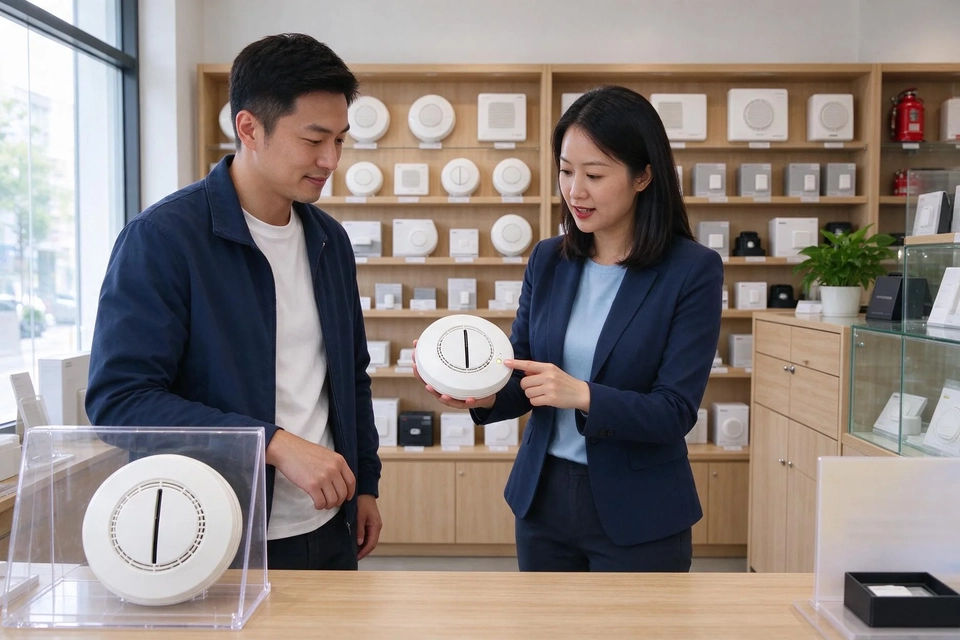
Here is a pattern that repeats across markets, described without naming any client. A supplier of home safety equipment runs a campaign in a US state and features a local official in a testimonial, because that official bought the product for a family member. The ad looks commercial, so the supplier assumes the exception applies. The reviewer then notices that the voiceover calls the person by her office title.
The metric to track is not click-through rate. It is the share of ads in the account that carry a person and a political marker at the same time: the count of disapprovals divided by the count of ads reviewed, over a fixed window such as a month. A rise after a creative refresh is correlation until the flagged ads are read one by one, because the flagged set may simply be the set that happened to be reviewed.
Two fields per ad are enough, the person and the political marker. Storing nothing about the person's political role beyond what the creative shows also keeps the team clear of consent and privacy rules.
Where Topkee Media fits as a commercial Google Ads partner
Topkee Media runs Google Ads for commercial advertisers, and its working method sits right at the boundary this update describes. The team treats account qualification as the first step of any campaign: it prepares the account, works through the platform's review requirements, and opens accounts in the client's name so that verification history and exemptions stay with the advertiser rather than with the agency.
Its ad compliance practice pre-tests creative against platform advertising policies before launch, which is where a stray party reference or an office title in a headline gets caught. The Performance Google Ads service covers account setup, keyword research, landing page work, conversion tracking and periodic reporting, with media placed on Google alongside Yahoo, Bing and Baidu. Topkee Media describes its Hong Kong team as an official Google Ads partner and holds Premier Partner status; Topkee serves Singapore advertisers from an office at Raffles Place.
What to watch next
Google's update notice is the document to keep. Watch for the policy page to move from a promise to a dated change, and re-read the United States section when it does. Watch the state-level restrictions as well: the US section carries extra rules for several states, and an ad that clears the commercial exception can still be barred for other reasons.
Set a monthly review of disapproval reasons in the account. A sem company singapore that treats review outcomes as a metric will see a policy change in its data before it reads about it in an announcement. The channel report definitions used for Google Ads show how search, Shopping and Performance Max are broken out, a sensible place to record the campaign a flagged ad came from. The Singapore team's Google and Meta ads page is the entry point if the next step is a review of the account setup.
FAQ
Does the exemption remove US Election Ads verification?
No. It defines a narrow set of ads that do not need verification; an ad that refers to a party, the political office or a campaign still does.
Does the US commercial exception apply to Singapore election ads?
No. The exception sits in the United States section of the policy. Singapore has its own restrictions, and ads that influence a Singapore election or a matter of public interest there remain prohibited.
What happens if an ad is disapproved?
Edit the ad or contact Google to have it reviewed again. Editing resubmits the ad and its destination for review, and Google says most ads are reviewed within 1 business day.
Does a government programme ad need anything else?
It still has to meet the two conditions: a legally established programme, product or service, and no direct or indirect reference to a party, the political office or a campaign. Other Google Ads policies continue to apply.
Sources
- "Google Ads Adds Commercial Exemptions To US Election Advertising Policy", Search Engine Roundtable, 2026-11-18. https://www.seroundtable.com/google-ads-commercial-exemptions-us-elections-42547.html
- "Update to Political Content policy (November 2026)", Google Advertising Policies Help, 2026-11-16. https://support.google.com/adspolicy/answer/18753522?hl=en
- "Political content", Google Advertising Policies Help, undated (read 2026-11-18). https://support.google.com/adspolicy/answer/6014595?hl=en
