
Server-side ad calls: SEM agency survival?
No. Not as a permanent fix. Moving ad calls off the browser gives ad tech firms room to breathe, but it does not restore the identity signals Safari has decided to block. If you are buying paid media in Singapore and weighing up a sem agency for the next contract, the practical question is narrower: which parts of your tracking and bidding survive a browser that keeps taking signals away, and which parts are borrowed time?
As of November 2026, the trigger is concrete. Digiday reported on November 3, 2026 that Apple's Safari browser has begun blocking domains tied to identity resolution providers, including The Trade Desk and ID5, that link browsing to email addresses. The industry's answer has been to push ad calls server-side, through IAB Tech Lab's Trusted Server and similar setups. Whether that is a fix or a postponement is the decision this article helps you make.
Key takeaways
- Safari's blocking of identity-domain calls is a browser-level change; server-side ad calls move the request but not the identity data Apple objects to.
- Trusted Server gives ad tech firms a measure of autonomy, but the autonomy is conditional on behaving within what browsers will tolerate.
- Google's ad tech remedies ruling opens a path for Prebid to take over the final bid decision that Google's ad server currently holds.
- For an advertiser, the durable investments are clean conversion tracking, first-party data and auction structures you can audit, not one more identity workaround.
What does Apple's Safari change actually block?
Safari on iOS 27 began blocking domains belonging to identity resolution providers. Those providers, The Trade Desk and ID5 among them, connect a person's browsing activity to their email address so that a buyer can recognise the same person across sites. A sem agency buying inventory on your behalf has, until now, leaned on that cross-site view for frequency capping and exclusion lists.
The block is aimed at the call itself, not at the advertising concept. A buyer's tracker cannot reach the identity domain from inside Safari, so the person does not get matched. For a search and programmatic buyer, the effect is a shrinking pool of recogniseable users in Safari traffic, and a growing share of campaigns that can only be measured by what happens on the advertiser's own site. The vendor wants to recover the match. The buyer mostly wants an honest count of what the campaign sold. Those two goals have drifted apart, and a reputable sem agency singapore team will name the gap before you ask.

What is Trusted Server, and what does it move?
Trusted Server, the mechanism from IAB Tech Lab, moves the ad call to a server that the publisher or the ad tech firm operates, rather than letting the browser make the call. On Digiday's podcast, published on the article's date, Seb Joseph and Ronan Shields described the industry's first reaction as treating Trusted Server as close to a cure-all.
That reading has a problem. Joseph argued in the same conversation that leaning on Trusted Server as a durable workaround "misses the point entirely", because Apple's problem is with the mechanism, not only with the companies it has already named. Apple, he said, does not want the practice happening to its customers in any form and will find a way to offset it.
Can ad tech take control back from Apple and Google?
Short answer: not really, and the podcast guests were blunt about it. Shields said ad tech cannot wrest control back, because Google and Apple own the browser and the mobile operating system, and Google also owns the ad tech platform and the cloud infrastructure underneath it.
What Trusted Server buys is a degree of autonomy, and Shields framed that autonomy as something firms have to earn and keep by behaving well inside it. For a buyer, that is a clue about how to read vendor claims: a server-side product is a tactical advantage, not a new set of rules. Note what Trusted Server does not do: it does not create a new identity source. It moves the request to a place the browser is less able to inspect, and that is a different claim from replacing the signal.
What the Google remedies ruling changes in the auction
There is a second front, and it is about the auction rather than identity. The remedies ruling in Google's ad tech antitrust trial gives Prebid an opening to flip the programmatic auction. Today Google's ad server has the final say on which bid wins; under that opening, Google's ad exchange would have to bid into Prebid's server instead.
Shields read Google's appetite for defending that ground as limited, pointing to the Oct. 28 earnings call, where the third-party display network, the GAM area of the business, was again the weak part. His interpretation was that Google would not lose much sleep over ceding it to Prebid.
For an advertiser, a more open auction structure is worth watching, but it does not solve identity. It changes who arbitrates the bid, not how many obvious users you can see in a Safari-heavy audience. Many buyers in Singapore track programmatic and search in the same dashboard, so a shift in the auction layer shows up first as a change in reported click and impression costs rather than in conversions.

Should the industry police itself, or wait to be policed?
Joseph raised the harder question: whether the industry should do more than the regulatory minimum to build trust, on the argument that browsers and platforms will otherwise keep tilting the field. Shields answered with doubt about how realistic that is. Read the exchange as a warning about incentives: the firms with the most to gain from a workaround are also the ones least likely to slow down and set a higher bar themselves.
This is where the advice stops applying to some companies. A small advertiser with one campaign and no engineering capacity cannot reshape industry conduct; what it can do is choose suppliers whose data practices survive scrutiny. A larger advertiser with a data team can put pressure on its vendors to document what they collect and where it is called from, and can ask a sem agency partner to put that documentation in the contract.
Gap filled: g4, the buyer's checklist for a server-side era
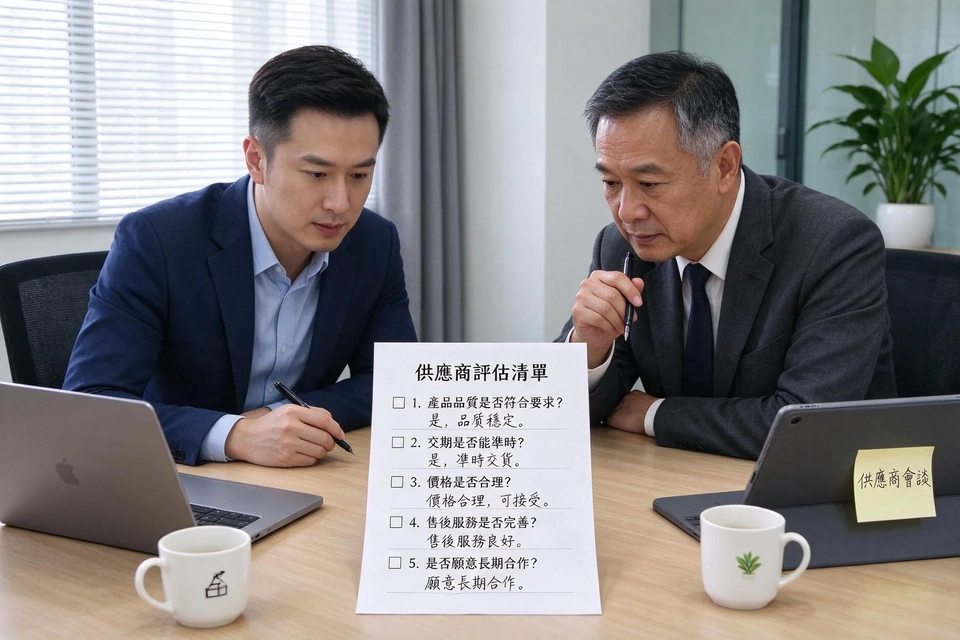
The search results on this topic stop at describing the shift. What they leave open is how a buyer should test whether a supplier's server-side setup is real or cosmetic. Here is a short checklist you can take into a pitch meeting.
- Ask where the ad call is made, and get the answer in a diagram. A supplier that cannot show the request path is describing a product, not an architecture.
- Ask what identity source the setup depends on. If it depends on an identity resolution provider's domain, Safari on iOS 27 is already a constraint. A sem agency that has not mapped this dependency has not tested its own stack.
- Ask which numbers come from the advertiser's own site rather than from a vendor panel. Conversion tracking you own is the part that survives a browser change.
- Ask what happens if the browser blocks the next domain. A supplier with a plan for that scenario is telling you it expects one.
- Ask how the auction and the billing are auditable. If the bid path changes under a remedies ruling, you want a paper trail that does not depend on one company's report.
If a supplier answers the first two clearly and the other three vaguely, treat the server-side pitch as a feature. If it answers all five, you are looking at a partner that has thought about the next browser update. A practical shortcut: ask for last quarter's report and check whether every conversion in it can be traced back to a session on your own site. If it cannot, the server-side story has not reached the measurement layer yet.
How Topkee approaches Google Ads performance work
Topkee is a digital marketing service provider that runs Google Ads performance campaigns for advertisers, with a service built around mobile-optimised Google Ads performance and measurable revenue potential. Its position on this shift is that performance work starts from clean tracking and intent structure on the search side, then extends to the rest of the buying stack, rather than from a single identity workaround.
That matters because search advertising sits largely outside the browser-level identity block: the query, the landing page and the conversion on your own site remain the advertiser's own data. Topkee's revenue tracking and lead conversion work is aimed at making that connection followable end to end, so that a campaign's value is read from your own records rather than from a third-party panel. For teams that buy search and programmatic together, that is where the durable measurement lives.
If you are comparing agencies, the test is the same one the checklist above applies to any vendor. An agency that can draw its tracking path and name the data it owns is easier to hold to account than one that leads with platform partnerships. The rest of the buying stack matters, but it sits on top of that foundation.
Recommended next step
Before you renew or switch a contract, walk through the checklist above with your current supplier and write down the answers. If your tracking relies on browser-side signals you cannot see, start with the work of making revenue and lead data yours. That is the approach behind Topkee's revenue tracking and lead conversion work. For the broader picture of how search performance should be judged, read why incrementality drives Google Ads growth.
If you want a second opinion before the next contract cycle, a good sem agency singapore advertisers can question directly is more useful than one that answers with platform names. Bring the five questions with you and compare the answers in writing.
FAQ
Does Safari's block stop all ad personalisation?
No. It blocks domains tied to identity resolution providers in Safari, which affects cross-site recognition. Contextual targeting and anything measured on your own site continue to work.
Is server-side advertising still worth implementing?
Yes, as an operational improvement: it moves ad calls under your own control and can reduce dependency on the browser. It should not be sold as protection from future browser decisions.
Will the Google remedies ruling lower my programmatic costs?
Not automatically. It changes who has the final say on a winning bid. Whether savings reach the advertiser depends on the auction rules and on how transparently each side reports.
What should I ask a sem agency singapore buyers recommend?
Ask for three things: a diagram of where ad calls happen, a list of the identity sources the setup relies on, and a statement of which performance numbers come from the advertiser's own analytics. A supplier that answers all three is one you can compare against the next, and an honest sem agency will welcome the questions rather than deflect them.
Do I need to change suppliers because of this?
Only if your supplier cannot explain its tracking. A supplier that can show the request path and the data it owns is a supplier you can keep through the next browser change. Switching costs are real, so make the move about evidence, not about the headline news of the week.
Sources
- "Can ad tech's server-side shift save it from Apple and Google?", Digiday, 2026-11-03. https://digiday.com/media-buying/can-ad-techs-server-side-shift-save-it-from-apple-and-google/