How to Brief a Creative Agency for an Experience-Led Launch
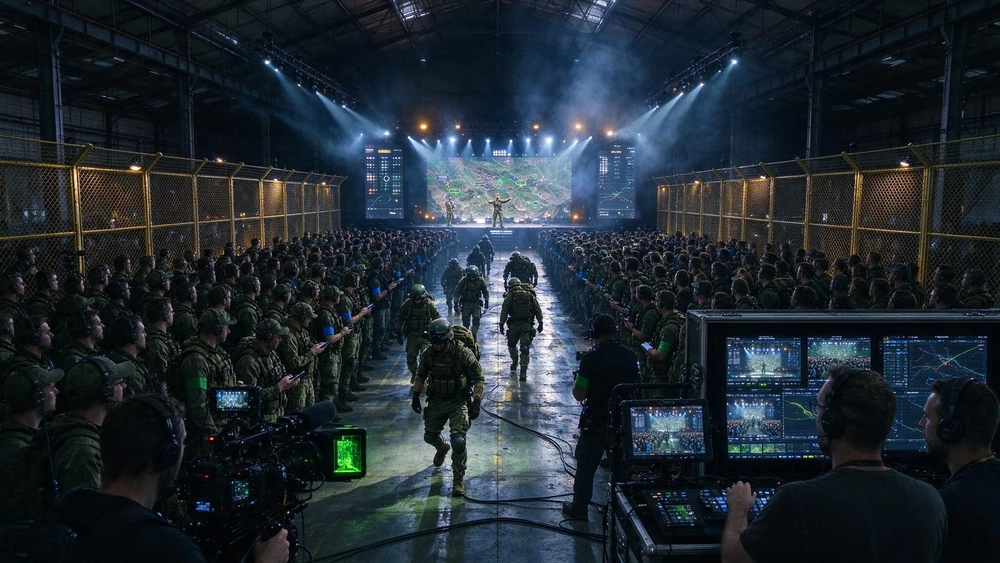
As of November 2026, the cleanest recent example of an experience-led launch is Emotive's Call of Duty pop-up at Carriageworks in Sydney, which sold out in less than 24 hours. If you are comparing digital agencies with creative shops for your next campaign, the brief you write decides more than the agency list does.
The reason is structural. Emotive's first work for Activision was built with strategy, creative, earned, talent and production delivered as one team across Emotive and its production company, Emotive Productions, with amplification planned from day one. That is a different operating model from the one most performance agencies sell, and it changes what you put in the brief and what you ask to see afterwards.
Key takeaways
- A launch experience a creative agency builds end to end is briefed on one shared outcome, not on separate creative and media scope documents.
- Creator content is part of production, not an afterthought: the Sydney activation generated more than 200 pieces of creator content on site.
- The proof point you ask for should be verifiable reach or revenue, not a deck of impressions.
- Before signing any agency, ask whether it works as a production partner or a media buyer, because the digital agencies market and the creative market answer different questions.
- Your next campaign brief should name the measurement method before the concept.
What Emotive actually built, and why it matters to the brief
The venue was Carriageworks, split by a giant DMZ fence that created two opposing territories. Over 17 and 18 October, hundreds of fans were drafted into the North or South, issued military permits and sent into missions unique to their side: covert night-vision operations inside pitch-black shipping containers, enemy operatives to hunt, contraband to find, even haircuts and state portraits where smiling was discouraged.
Emotive built a reason for people to stay through the reward mechanics. Missions earned stamps toward increasingly valuable rewards, and at key moments recruits could defect to the opposite side, giving up everything they had earned to switch. That is a retention loop built into the physical experience, not bolted on afterwards. When you brief marketing singapore partners on a similar build, this loop is the part to specify in writing.
The second detail is that the game ran alongside the room. Players could play the Modern Warfare title early, on a giant stage that overlooked the floor, which put the product itself into the experience rather than leaving it on the signage.
Gap filled: g3 What are the key differences between a digital agency and a creative agency?
This is the question the search results leave open, and it is the one that decides who you hire.
A creative agency owns the idea and the making of it: the strategic premise, the spatial or narrative design, the production, and increasingly the talent and earned amplification that carry it past the venue. That is why the digital agencies shortlist and the creative shortlist rarely overlap. A digital agency owns reach and conversion: paid search, paid social, landing pages, lead capture, CRM follow-up and the attribution that connects spend to revenue. The two are adjacent, not interchangeable.
The Emotive case shows where the line sits. Emotive delivered strategy, creative, earned, talent and production as one team, then worked hand in hand with Activision's media agency, Avenue C, to take the experience to wider Australia. The creative shop made the moment. The media agency extended it. Neither pretended to do the other's job.
| Question | Creative agency | Digital agency | Hybrid brief |
|---|---|---|---|
| Who owns the idea | The agency | Rarely; the media plan leads | Named creative lead, media partner behind it |
| What you buy | Concept, design, production, talent | Reach, conversion, attribution | Two contracts, one shared success metric |
| How success is judged | Attendance, earned reach, content volume | Clicks, leads, cost per acquisition, revenue | Both, agreed before the concept |
| Typical failure | Beautiful activation nobody measures | Efficient spend nobody remembers | Unclear ownership across the two |
If your campaign's whole value is a moment people have to be inside, hire the creative agency and give it the measurement mandate too. If your value is a consistently cheaper lead, that is a different commission.
How to write the brief: four questions to answer before the concept
Julian Tan's habit on any campaign brief is to start with what the announcement actually promises, not with the mood board. For an experience-led launch, answer these four in writing.
- What is the one action a visitor must take inside the room? Mission completion, product trial, a booking, a purchase. If you cannot name it in a sentence, the experience will become scenery.
- What content will exist because the experience happened? The Sydney activation enlisted 50 creators from gaming, comedy, sport and entertainment, with a combined following of more than nine million, and more than 200 pieces of creator content were produced on site across the two days. Decide before the build whether creator content is a line item or a hope.
- Who proves the result, and with what data? A ticketed pop-up's real outcome is attendance and on-site purchase, not a click. Ask the agency what it will track and where the records live.
- What does amplification look like on day one? Emotive built amplification in from the start rather than treating it as post-event distribution. Ask for that plan in the pitch.
Question two is the one most briefs skip. A launch experience that produces no content after the doors close only serves the people who attended, and the audience you cannot host is usually larger than the one you can.
Measuring an experience-led launch: what counts as proof
The single clearest number the Sydney activation produced was creator-side reach: Nathan Lust's collaboration with Jonny Tuivasa-Scheck hit 4.1 million organic views. That is a real, checkable figure, and it is the kind of number a brief should ask to see, because it sits outside the agency's own reporting.
Attendance and sell-out speed are the other two. A sell-out inside less than 24 hours, with hundreds of hopeful fans left on a waiting list, tells you demand existed before the campaign amplified it, which is a positioning result rather than a media result. Treat both, reach and demand, as separate lines on the report; combining them hides which one worked.
What a brief should not accept as proof is a bundle of platform impressions the agency itself bought. If the agency also bought the impressions, the number proves spending, not resonance.
Where the digital layer sits: Topkee's point of view
The lesson Singapore marketers should take is not that every launch needs a Carriageworks-scale build. It is that the experience and the measurable journey are two systems, and most brands buy only one of them.
Topkee is a Hong Kong-founded digital marketing and marketing technology company, long established with a Singapore company and Google Premier Partner status behind it. Its marketing singapore work sits on the digital reach-and-conversion side: paid search, paid social and display, landing pages and booking flows, lead management through Leadbox, and attribution through ROAS Truth, which runs on the client's own TTO CDP. That system traces a campaign from ad click to lead, conversation, opportunity and revenue, and sends qualified conversions back to Google and Meta so bidding optimises toward signed revenue rather than clicks. For a bookable or ticketed experience, that is the layer that answers the question the Emotive case leaves open: who did the moment actually bring in.
The limits matter too. Topkee Creative, the company's monthly creative subscription, delivers key visuals and short films, with standard videos capped at fifteen seconds, on two monthly tiers priced at HKD three thousand two hundred and HKD five thousand six hundred; it covers remote creative assets, not venue builds, spatial design or on-site event production. Topkee did not produce, host or partner on the Sydney activation, and has no Australian office. The point of view here is about the measurement layer, not the making of the event.
If your brand runs an experience in Singapore, the practical setup is a creative partner for the room and a data loop for what flows out of it, briefed together with the marketing singapore team that will run the paid side. The revenue tracking setup is the part most briefs forget to commission until the report is already due.
Recommended next action
Before you send the brief, compare the agency candidates on one page: who owns the idea, who owns production, who owns amplification and who owns the measurement. The guide on choosing an agency for a large SEM programme makes the same point for paid search, and the questions transfer.
Then decide which layer you are buying. If the answer is the measurable journey from first click to signed revenue, that is a digital commission and should be briefed as one.
FAQ
What is the difference between a creative agency and a digital agency?
A creative agency owns the concept, design, production and often the talent and earned amplification of a campaign. A digital agency owns reach and conversion: paid media, landing pages, lead capture, CRM follow-up and attribution. Emotive delivered strategy, creative, earned, talent and production for the Sydney Call of Duty activation; Activision's media agency, Avenue C, extended it to wider Australia.
How do I brief an experience-led launch so it can be measured?
Name the one action a visitor must take, the content that must exist afterwards, who proves the result and with what data, and what amplification looks like from day one. Ask for the measurement method in the pitch, not after the event.
What numbers should I ask a creative agency to report?
Attendance and how fast the experience sold out, creator content volume, and the organic reach of individual creator posts. The Sydney activation sold out in less than 24 hours and produced more than 200 pieces of creator content on site, with one creator collaboration reaching 4.1 million organic views.
Do I need both a creative agency and a digital agency?
Usually, yes, but with one shared success metric. The two can sit in one contract or two, as long as the measurement method is agreed before the concept and the records stay with you rather than only with the agency.
Can a subscription creative service replace an event agency?
No. A monthly creative subscription covers design and short video assets delivered remotely. Venue builds, spatial design and on-site production are scoped separately, and the brief should say so.
Sources
- "Call of Duty takes over Sydney as indie agency Emotive brings Modern Warfare 4 to life", Campaign Brief, 2026-11-05. https://campaignbrief.com/call-of-duty-takes-over-sydney-as-indie-agency-emotive-brings-modern-warfare-4-to-life/

Article Author
Pang Sir
