Answer engine visibility: how to measure it before you buy
Answer engine visibility is the degree to which AI answers mention your brand and cite your site as a source, describing it accurately. As of November 2026, marketers evaluating geo services singapore suppliers face a measurement problem before they face a price problem: the answers the service reports on are generated live, differ between engines, and leave no clean trace in a website analytics tool. This guide sets out what the numbers mean, how to sample them without fooling yourself, and how to read a quote that is written in tracked questions rather than in promises.
Key takeaways
- Mention, citation, sentiment and share of voice are the four signals an AI answer gives you; a ranking position is not one of them.
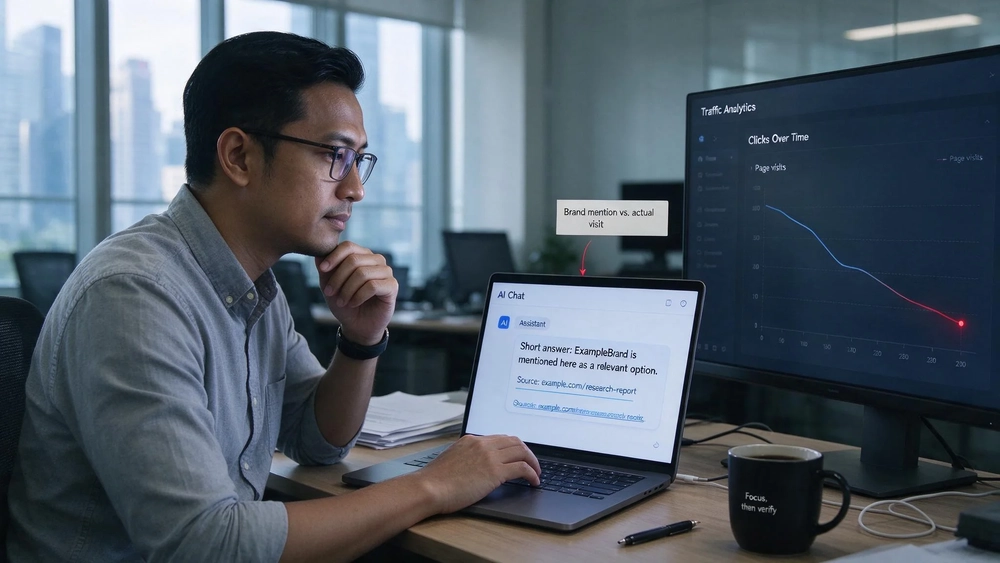
- Click data from Google's AI summaries explains why traffic can fall even when your brand is named in the answer.
- A defensible visibility figure is a rate over a fixed question set, a fixed engine and a fixed language, with missing data labelled separately.
- Off-site mentions correlate with AI Overview visibility more strongly than backlinks do, so a link-building retainer is not the whole answer.
What does answer engine visibility mean for a Singapore marketer?
Walk through any B2B prospect's morning. They used to type "best payroll software Singapore" into Google and scan ten blue links. Now the same question goes into a chat window, and the reply names two or three vendors, describes each in a sentence, and sometimes links to a page. If your firm is not in that sentence, you lost a consideration moment you will never see in the referrer log.
HubSpot's playbook, updated 10 November 2026, grades this visibility on four signals: mentions (your brand named in the answer), citations (the answer linking back to your content or to third-party pages that discuss you), sentiment (whether the sentence around your name reads positive, neutral or critical), and share of voice (how often you appear next to competitors under a consistent prompt set). Its own description puts the shift bluntly: visibility has moved from the search result page to the sentence.
The practical consequence for a small team is scope. You cannot track every question in your market. You pick the questions where a wrong answer costs a sale, such as comparative buying questions with your category and region in them, and you accept that the rest go unmeasured.
What do the click data say about traffic you no longer see?
Pew Research Center studied browsing from 900 U.S. adults and compared visits to Google pages with an AI summary against pages without one. Some 18% of all the Google searches in the study generated an AI summary. On the pages that had one, users clicked a traditional result in 8% of visits; on pages without one, they clicked a result in 15% of visits, nearly twice as often. Clicking a link inside the summary itself happened in just 1% of visits to summarised pages. Browsing sessions also ended on 26% of summarised pages, against 16% of pages showing only traditional results.
Read that as a marketing manager and the lesson is uncomfortable: being cited inside the summary is not the same as earning a visit. The summary shortens the journey. HubSpot's guide quotes a separate figure, that 58% of Google searches end without a click, and Pew's 18% share of searches producing a summary is a different measurement on a different sample. Keep them apart in a board slide. One says how often a summary appears; the other says how often a search closes without a click, whatever the reason.
What the click data do not say is that visibility is worthless. HubSpot's early-signs guide cites AEO-type traffic converting 27% of AI traffic into sales-qualified leads in its early-adopter examples. Fewer visitors, arriving further down the buying process, is a plausible mechanism; it is still a figure from one vendor's guide, so treat it as a hypothesis to test on your own pipeline, not a benchmark to quote to your finance director.
How do you measure answer engine visibility?
The measurement has to survive one question from your board: what exactly did you count? HubSpot's tracking process is a sound starting frame. Pick the topics that drive revenue, build a standardised prompt set and keep it in one place, choose the priority engines, then run each prompt three to five times per engine in a fresh chat so personalisation does not contaminate the sample, and log the result per prompt and engine. One screenshot proves nothing; a repeated sample shows a trend.
The definition is where most reports fall apart. A workable pair of formulas, as documented in Topkee's AI visibility material, is:
- Mention rate = valid answers that contain a brand mention ÷ valid answers under the same conditions.
- Source appearance rate = valid answers in which the brand's own site appears ÷ the same group of valid answers, computed only on engines that support source analysis.
Repeated mentions within one answer count once. "No source" and "missing data" are recorded as separate labels, never merged into a zero. The denominator is checked against the system before any rate is calculated. This matters because a report that silently drops failed queries will show a rise every month.
What must stay fixed before any comparison?
Question version, engine, language, region and sampling cadence. Change the wording of a question and you have a new question, not an improvement. Run the same question on a second engine and you have a bigger sample, not a new tracked question. Compare a question-led sample with a brand-led sample and a vendor can manufacture a gain simply by writing the brand name into the prompt. Keep the two apart, and keep a version history when a question is edited.
Engines also differ in what they expose. Some answers carry retrievable sources and citations; others do not. A mention rate computed across a set of engines that cannot all report sources has to be presented per engine, or the source appearance rate loses its denominator.
Which numbers belong in a monthly report?
A geo services singapore monthly report should name the period, the question version, the engines, the sample count and the failure count, and keep evidence for any answer it quotes. A worked example helps explain the arithmetic: a fixed sample of valid answers, a count of the answers that mention the brand, and the ratio between them is the mention rate; the same count for pages where the brand's own site appears gives the source appearance rate. The sample size is an illustration, not a promised sampling frequency, and a sample report is not a client result. The headline is the traceable ledger underneath it, not the percentage.
Which lever moves the needle first: mentions or backlinks?
Spend the budget where the evidence points, and treat geo pricing singapore quotes as a capacity question first. Ahrefs analysed 75,000 brands against AI Overview mentions and found branded web mentions correlating 0.664 with brand visibility in AI Overviews. Backlinks correlated only 0.218. Branded anchors came in at 0.527 and branded search volume at 0.392, so all three of the strongest signals sit off your own website: what other sites say about you, how they link your name, and whether people search for you at all.
That is a different spending pattern from the one most SEO retainers are built on. A backlink package buys authority for a rankings page in a search engine; it does little for whether a language model associates your brand with "payroll software for SMEs in Singapore". The author of that association is usually a comparison page, a directory, a trade publication or a forum thread that a model retrieves and trusts. Correlation is not causation, as Ahrefs itself notes, so treat the coefficients as a ranking of things to try, not a guarantee of movement.
The uncomfortable part for a marketer: the work here is editorial and commercial, not technical. Someone has to get your firm into the pages that models cite, and that is a relationship task as much as a content task.
What should a GEO service contract actually contain?
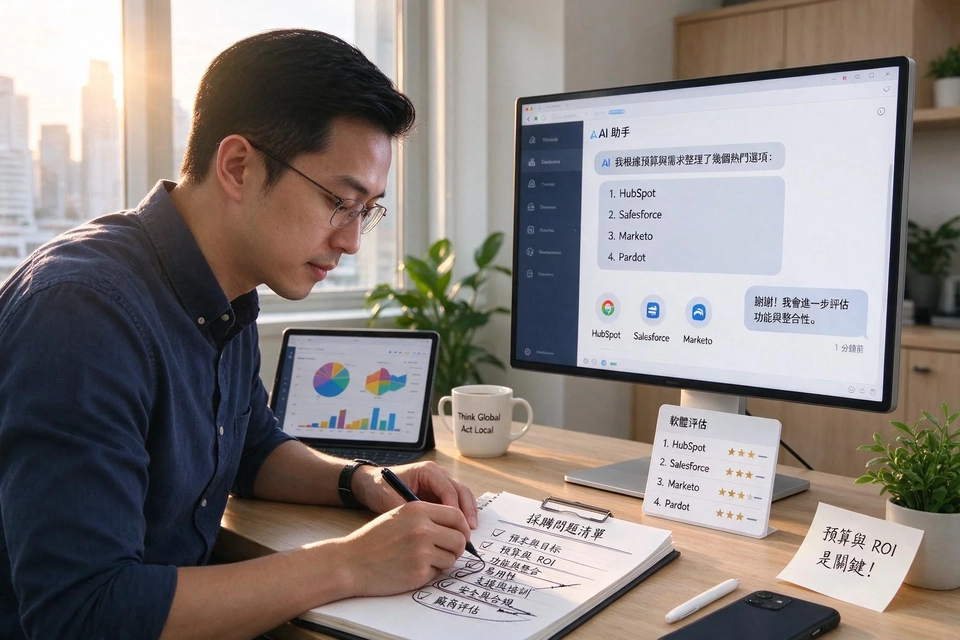
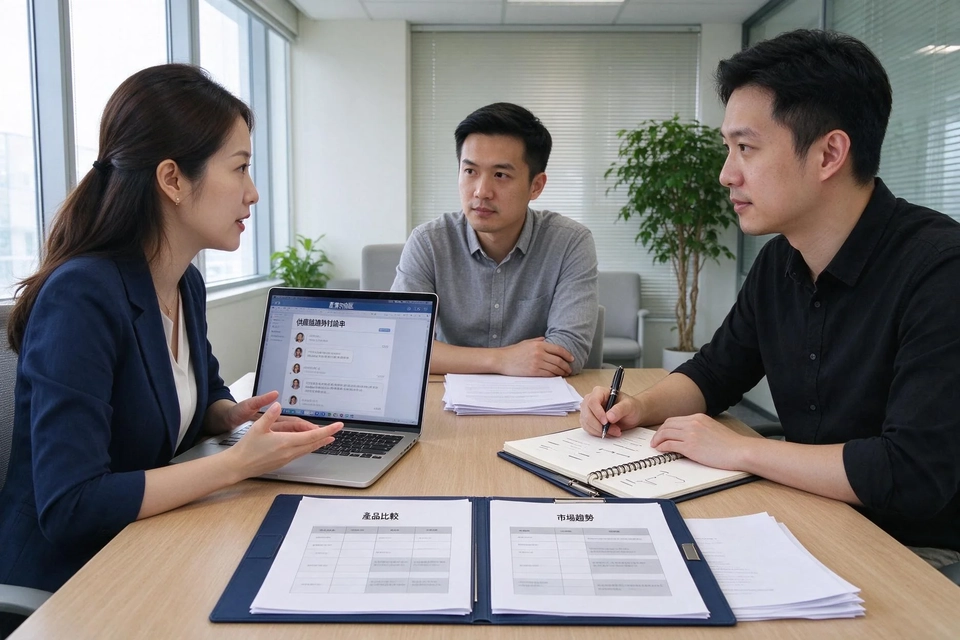
With a framework in hand, geo services singapore proposals become readable. Four monthly deliverables are the minimum a serious retainer should produce: a monitoring report that states period, question version, engines, sample and failure counts; a content pack and ledger showing each article's buyer question, target page, sources and status; a prioritised action list that separates proposed, approved and implemented items; and one review to go through all three. If a supplier cannot show that ledger, the monthly fee is buying activity you cannot audit.
Check the capacity numbers against the work you actually need. In Topkee's documented tiers, the levels of the service differ in active tracked questions and in knowledge articles delivered per month, while the analysis categories and the four monthly deliverables stay the same. Active tracked questions is a cap on questions monitored at once, not a count of monthly queries or executions. Two numbers moving together means the tier is really a capacity choice.
Then read the scope line. The documented default is one brand, one primary website, one market and one content language, with multi-market or multi-brand work quoted separately. A Singapore SME with an English site and a Chinese site is asking for two content languages, and the scope should say so before the invoice does.
How to read a price tier in tracked questions
Divide the fee by the number of tracked questions you will actually use, not by the headline question count. A larger tier makes sense only if the team can name the extra questions worth monitoring; otherwise the extra capacity is dormant. This is the same discipline as buying ad impressions: the unit is the sample, and the usable sample is the one your own people can review. Pricing for the group's geo pricing singapore offer is quoted per project rather than published for the Singapore market, so ask for the quote in tracked questions and articles, and compare that against the fee.
Where does Topkee fit?
Topkee's GEO service is the answer-engine side of this work under the generative engine optimisation label: it starts from the questions buyers ask rather than from brand names, and runs an ASK, UNDERSTAND, IMPROVE chain. The first step collects the real buying questions; the second samples how the brand currently appears in AI answers under a fixed question version, engine, language, region and sampling cadence; the third fixes the gaps with reviewed knowledge content. Six workstreams sit under it: prompt tracking, query fan-out analysis, sentiment and brand-description checking, competitor comparison, AI browsing analysis, and knowledge content writing.
The measurement layer is GEO Insight, which reports brand ranking, visibility, competitors, cited sources and sentiment inside AI answers. Two documented limits are worth holding on to when you read its output. Engine data is collected through APIs, so it does not equal what an individual user sees in a consumer AI product; a report should therefore say "observed under the agreed API environment and fixed sample", never "every user sees". And the citation summary includes retrieved sources with inline=false, so it cannot be presented as a visible citation rate without separate filtering.
The honest boundary is worth repeating in your own supplier talks: no guarantee of an AI recommendation, fixed exposure or query volume. The commitment is to completed monitoring and analysis, plus content delivery observed through traceable samples and work records. If a proposal promises that your brand will be recommended by a named engine, that promise has no mechanism behind it in any documented method I have read.
What is worth watching next quarter?
Three things. For a geo pricing singapore buyer, first, whether engine vendors make citation data easier to verify; until then, hand-checking visible citations stays part of the job. Second, whether your own buying questions get longer and more comparative, because longer questions are where summaries appear most often: Pew found 8% of one- or two-word searches produced a summary, against 53% for longer searches of ten words or more, and 60% of queries starting with a question word produced one. Third, whether your CRM can attribute a lead that arrived after an AI answer, which needs a manual question at intake before any analytics model catches up.
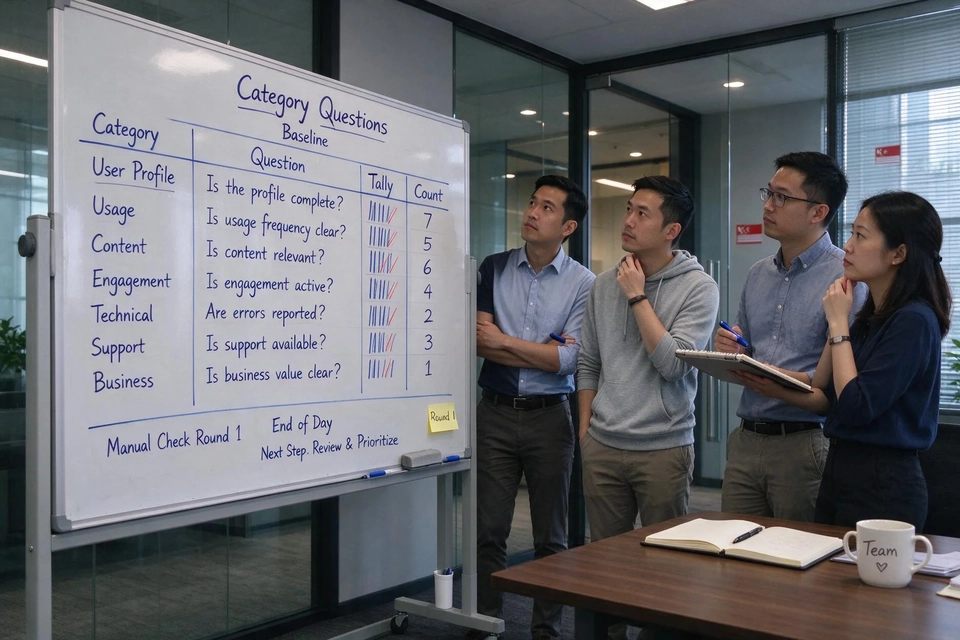
Two background reads pair well with this piece: [AEO vs. Search Rankings: AI Visibility Basics](https://www.topkee.com.sg/dynamic/ai-visibility-vs-search-rankings-is-your-agency-measuring) for the ranking-versus-visibility distinction, and AI answer ad counts: what apparel and electronics show for how paid placements behave inside AI answers. The next step I would take is to draft the question set this week, a couple of dozen questions naming your category and Singapore, and run one round by hand. That baseline costs an afternoon, and it is the only way to know whether a later quote is selling you progress.
Frequently asked questions
Is answer engine visibility the same as SEO ranking?
No. A ranking is a position on a search results page; visibility is whether your brand is named, described correctly and cited inside a generated answer. A page can rank first and be absent from the AI answer, and the metrics differ accordingly.
How many questions should my visibility sample cover?
Enough to separate a trend from noise, and few enough that your team reviews every answer. A 30-question set run several times per engine is a common starting shape; the plan should grow only when someone can name the additional questions worth watching.
Can a vendor guarantee my brand will be recommended by AI?
No credible method supports that. Models change answers between sessions and between engines. A contract can commit to completed monitoring and content delivery, with traceable samples, but not to a specific recommendation, fixed exposure or a volume of AI traffic.
Why does my traffic fall while my AI visibility rises?
Because an answer can name your brand without sending a visit. In Pew's study, users clicked a result in 8% of visits that carried an AI summary, against 15% without one, and clicked a link in the summary itself in only 1% of those visits.
Do I still need backlinks if I pay for GEO?
Backlinks still support classical search, but they are a weak lever for AI mentions compared with branded mentions across the web. Budget both, and expect the off-site editorial work to carry more weight in answer engines.
Sources
- Cassie Wilson Clark, "Answer engine visibility: The playbook for marketers", HubSpot Marketing Blog, 2026-11-10. https://blog.hubspot.com/marketing/ai-search-visibility
- "HubSpot's Early-Signs Guide to AI Engine Optimization (AEO)", HubSpot, undated landing page. https://offers.hubspot.com/aeo-guide-early-signs
- "Google users are less likely to click on links when an AI summary appears in the results", Pew Research Center, 2025-07-22. https://www.pewresearch.org/short-reads/2025/07/22/google-users-are-less-likely-to-click-on-links-when-an-ai-summary-appears-in-the-results/
- Louise Linehan, "An Analysis of AI Overview Brand Visibility Factors (75K Brands Studied)", Ahrefs, 2025-05-26. https://ahrefs.com/blog/ai-overview-brand-correlation/