Answer engine optimization best practices: what to do in 2026
As of November 2026, aeo work means making a page easy for an AI engine to extract and cite as the answer, rather than pushing it up a list of links. The practices are mostly structural: lead with the answer, mark up the page, show your evidence, and measure mentions separately from clicks.
Key takeaways
- An answer engine selects sources to quote, so the unit of work is a page section that answers one question in plain words.
- AI Overview citations still lean on pages that rank organically, though not only on the top positions, so existing SEO gains carry over.
- Structured data, citations and a stable technical base change whether a page can be used at all, before content quality is judged.
- Measurement has to separate a mentioned brand from a cited source, and a retrieved source from a citation visible in the answer.
What does answer engine optimization actually change?
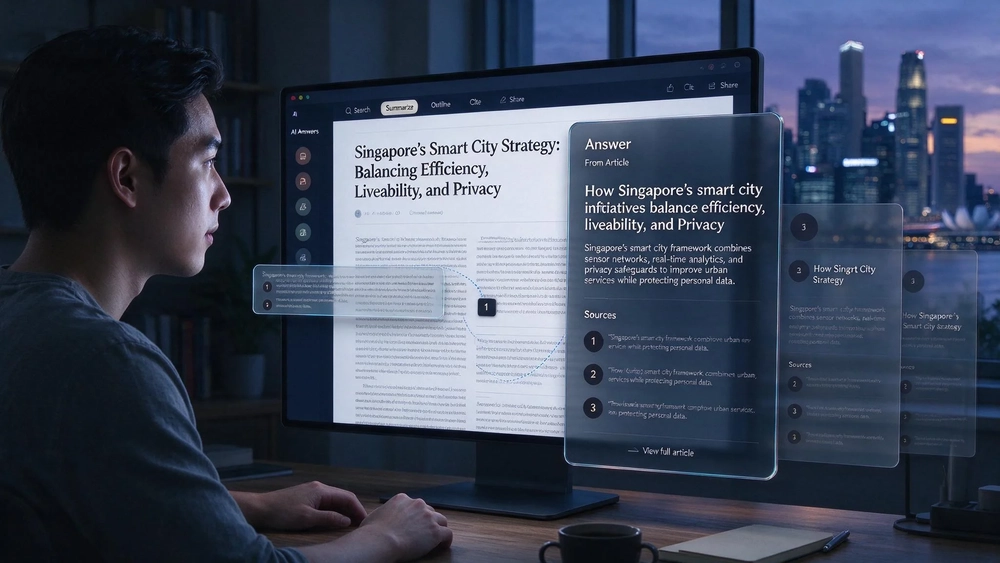
HubSpot's guide of November 2026 draws the line where most practitioners draw it. A traditional search engine returns a list of resources and the reader chooses; an answer engine assembles one answer from several sources and names the ones it used. AEO is about being one of those named sources, so the target is a citation inside an answer rather than a position in a ranking.
That reframing changes what a writer optimises for. A ranking page can open with context and build to a conclusion, because the reader scrolls. A page competing for a citation has to put the conclusion where a model can lift it in one pass. HubSpot sets the practical size at a 40- to 60-word direct answer at the top of every key section, with the detail below it for the human reader. The same habit of answering first is the core of what a aeo brief should ask for, whether the work is done in-house or bought.
The underlying search still matters. BrightEdge's study of AI Overview citations across several months found that 54.5% of citations came from pages that also ranked organically, up from 32.3%. Read the direction rather than the decimals: citations increasingly come from the organic pool, so this work sits on top of SEO rather than replacing it.
How do people search differently now?
The shift is in behaviour, not only in technology. HubSpot reports that 42% of buyers use AI search as part of their evaluation, and that 79% of people who already use AI for search say it gives a better experience than traditional search. For a marketing lead, that is a buying-stage change: if a shortlist is formed inside an AI answer, a brand absent from the answer is absent from the shortlist.
Click data shows the same movement from the search side. A SparkToro study of clickstream data found that 68.01% of Google searches ended without a click in the first four months of 2026, against 60.45% in 2024. The gap grows where AI Overviews appear, which SparkToro says cut click-through rate by nearly 60% when present.
Two details keep the picture honest. SparkToro measured only 0.34% of searches going to AI Mode in that period, so AI Overviews, not AI Mode, account for most of the lost clicks today. Google also said at its developer conference that AI Mode had passed 1 billion monthly users, so the audience is growing faster than the current traffic split suggests. A brand planning spend on one surface should say which one it means.
Which AEO best practices move the needle?
HubSpot lists eight practices, and four carry measurable backing. The others are sound editorial discipline that the study data does not size.
| Practice | What it means in practice | Evidence in the dossier |
|---|---|---|
| Answer first | A direct opening answer sized as the source recommends | HubSpot, November 2026 |
| Structured data | FAQPage, Article, HowTo and Organization markup on a template | Pages with structured data cited 2.1x more often (BrightEdge) |
| Credibility signals | Citations, statistics and quotes from named sources | More visible with them (HubSpot range) |
| Question inventory | Real buyer questions mapped to funnel stage | Method, no figure |
| Community presence | Genuine answers on forums and communities engines quote | Reddit and Quora show up in AI Overviews, rising sharply (Semrush) |
| Snippet and PAA capture | A heading that matches the question's wording | Method, no figure |
| Voice-friendly answers | Short, self-contained spoken sentences | Method, no figure |
| Local consistency | Matching name, address, phone and hours everywhere | Measured separately below |
The structured data figure deserves a caveat. The BrightEdge finding is an association between markup and being cited, not a controlled experiment: pages with clean markup tend to be pages built with more care. Treat 2.1x as a reason to prioritise markup, not as a promised lift.
What technical foundation do answer engines need?
HubSpot's checklist is a list of conditions for the content being readable at all. A model cannot quote a section it never receives.
- Render the critical content on the server, so the first response holds the text rather than an empty container filled later by script.
- Use a logical heading order: one H1 per page, H2 for sections and H3 below them, with no level skipped for styling.
- Pass Google's Core Web Vitals thresholds on load speed, responsiveness and layout stability.
- Keep URLs descriptive, so the address states the subject.
- Wrap lists in list elements and sections in structural tags, so the page's shape is machine-readable.
- Write specific anchor text on internal links, never a generic phrase that names nothing.
- Disable JavaScript and check the content survives; if it vanishes, crawlers and assistive technology cannot see it either.
The speed item is worth reading carefully. The thresholds HubSpot gives are known by their metric names, largest contentful paint under 2.5s, first input delay under a tenth of a second and cumulative layout shift kept very low; FID has since been retired from Google's own reporting and replaced by interaction measures, so check a current Core Web Vitals report before planning spend against FID specifically.
How much does ranking still decide AI citations?
Enough to keep SEO funded, and less than most teams assume. BrightEdge's comparison over more than a year gives the mechanism. Overlap between organic ranking and AI Overview citation grew from 32.3% to 54.5%, which makes ranking the strongest single predictor of being cited. The industry spread is wide, though: healthcare reached 75.3%, while e-commerce stayed at 22.9% and barely moved.
The sharpest number in the BrightEdge data is that only 16.7% of citations come from results in the top ten positions. An engine assembling an answer looks past the first page for a page that states the fact plainly, which is why a well-structured article below the fold of page one can still be quoted above a thin page near the top.
For a Singapore SME, the practical reading is that work on pages that already rank is the cheapest first move. A page near the top of page one has earned the authority signal; it now needs the answer-shaped structure that makes it quotable. Treat answer engine optimization of pages that already rank as the first quarter's budget, and new pages as the second.
How should a brand measure AI visibility?
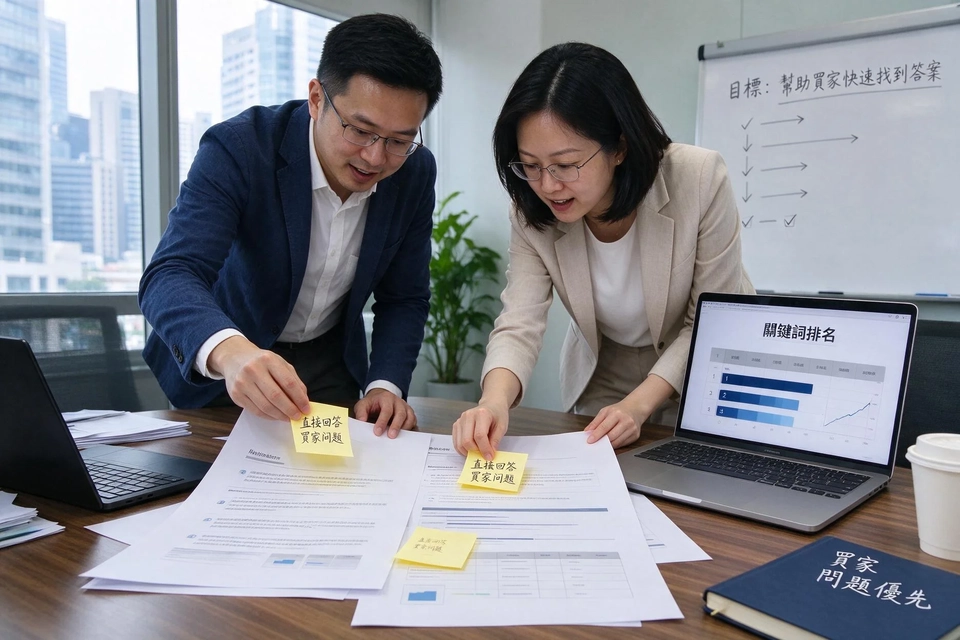
Clicks undercount this work, so a measurement frame has to be built on purpose. Any aeo proposal should make that explicit before it quotes a visibility figure. HubSpot's answer to the ROI objection is that AI-driven visitors convert on average 4.4x higher than standard organic visits, which makes AI work defensible to leadership while referral sessions stay small. That is a vendor figure and should be checked against your own pipeline over a quarter before it is quoted upward.
A frame that holds up separates four things that are easy to blend:
- Whether the brand was mentioned in an answer at all.
- Whether the site's page was cited as a source in that answer, visibly or only in the retrieval set.
- Whether the description of the brand was accurate.
- Whether any of this produced a visit and an enquiry.
The 4.4x figure applies to visitors, which means a click happened. When an engine cites you inside the answer, the reader may never click; when it only retrieves your page, there is no visitor at all. Report each layer separately and the monthly change becomes readable.
Where does local visibility stand?
Local searches are where the gap between being findable and being recommended shows most plainly. The UD Technology guide written for Hong Kong businesses reports that 45% of consumers used AI to find local businesses, a jump from a low single-digit starting point a year earlier, and that ChatGPT recommends only 1.2% of all local business locations. It also reports that 83% of restaurants never appear in AI-generated local recommendations.
The same guide puts adoption in context: about 20% of organisations have started implementing AEO, while 70% expect it to reshape their digital strategy. Early adopters were measured capturing 3.4 times more AI visibility than late adopters. Read that as a reason to start rather than a forecast of advantage; a lead built on a channel few have joined is usually temporary.
How long does this take, and how do you judge a provider?
Set expectations from the source's own timeline before an agency quote arrives. HubSpot reports early wins within four to eight weeks and meaningful momentum over six to twelve months. Its early work is question mapping, a content audit and schema on priority pages; the six-week mark is where snippets, PAA placements and occasional answer mentions appear.
That timeline also gives a way to judge a proposal, which this article sets out as a decision table rather than in prose.
| Question to ask | A sound answer | A weak answer |
|---|---|---|
| Which questions will be tracked? | A written list in buyer words, versioned | "We cover your key terms" |
| Which engine, language and region? | Fixed and named | Any engine, no sampling rule |
| How is a mention counted? | Brand mentions divided by valid answers under the same conditions | A visibility score with no denominator |
| What is delivered monthly? | Reports, content pieces and an action list | A dashboard login |
| What is not promised? | No guarantee of AI recommendation, exposure or inquiry volume | Assured inclusion in AI answers |
The last row is the one to read twice. No provider controls what an AI engine chooses to say, and a brief that asks for guaranteed inclusion is a brief that will be met with something other than evidence.
How Topkee approaches the same work as GEO
Topkee names this work GEO, generative engine optimization, and treats AEO as the industry's general term for it. The question it sets up is not which page ranks but whether, when a client asks an AI engine, the brand appears, is described accurately and is cited as a source. The service is sold as a monthly programme, with monitoring, analysis and content delivery connected end to end.
Its method runs in three stages, ASK, UNDERSTAND and IMPROVE, across six services included in every tier: prompts tracking on real buyer questions, query fan-out analysis of the sub-queries an engine returns, sentiment and brand description, competitor comparison under identical questions, AI browsing analysis of retrieval sources and cited pages, and knowledge content writing. The standard content specification for that writing is one buyer question per piece, answered in this order: direct answer, the situation it applies to, verifiable facts, sources, and a next step.
The measurement frame is what a Singapore marketing team can carry over, and it is also where a generative engine optimization singapore brief should pin its definitions. Mention rate is valid answers containing the brand divided by valid answers under the same conditions. Source appearance rate applies only on engines that expose source data. Reporting is split into four layers: service delivery, search and AI visibility, traffic and engagement, and business results. Topkee states the limits plainly as well: sampling runs through an API and does not equal what a single consumer sees, retrieved sources are not visible citations, and a brand that is simply not mentioned is not the same as one described unfavourably.
On Singapore, the packages above are priced for the Hong Kong market. Topkee set up its Singapore company a short while ago, and a generative engine optimization singapore engagement is scoped as a cross-market project, with engines, sampling frequency, competitor list, question versions, content language and publishing responsibility confirmed and quoted separately.

What should you do this month?
- List the questions buyers ask at comparison and purchase stage, in their words, from sales calls and search console data.
- Add a 40- to 60-word direct answer to the top of the sections that answer those questions most often.
- Ship FAQPage and Article markup on those pages before anything else, since the markup works without a rewrite.
- Run the technical checks above and fix whichever fails first: server-rendered content, heading order, then speed.
- Record a baseline of brand mentions and cited sources for the question list, on one named engine, before changing anything else.
If the AEO work sits alongside paid campaigns, the reports worth reading next are AI-Powered Facebook Ads Boost Conversions and AI-Optimized PMax for Nonprofit Sponsorship Growth, both of which show where AI systems already influence the buying path.
Frequently asked questions
Is AEO just SEO with a new name?
No. SEO competes for a position in a list of links; AEO competes to be one of the sources an engine quotes inside a single answer. They share a foundation, since 54.5% of AI Overview citations come from pages that also rank organically, but the formatting, markup and measurement differ.
How long before a brand sees results from AEO?
HubSpot reports early wins within four to eight weeks and meaningful momentum over six to twelve months, depending on the starting point. The first stage is mostly question mapping, auditing and markup; visibility usually moves before revenue does.
Do we need schema markup on every page?
Not every page. Prioritise pages that answer questions most directly, then extend to article, organisational and product markup as templates allow. Pages with structured data are cited 2.1x more often in AI Overviews, so the first pages you mark up should be the ones you most want quoted.
Can an agency guarantee we will be recommended by ChatGPT?
No credible provider can, and Topkee states explicitly that its GEO service does not guarantee AI recommendations, fixed exposure or inquiry volume. What can be delivered is a tracked question set, cited-source analysis, content that answers those questions and a monthly report on whether the brand is mentioned and described accurately.
How do we tell a mention from a citation?
A mention is the brand appearing in the answer's text; a citation is the brand's page being named as a source. Engines also retrieve pages they never show, so a third state exists between the two. Count them separately, and only on engines that expose source data.
Sources
- Ramona Sukhraj, "Answer engine optimization best practices marketers can't ignore in 2026", HubSpot Blog, November 2026. https://blog.hubspot.com/marketing/answer-engine-optimization-best-practices
- "AI Overview Citations Now 54% from Organic Rankings", BrightEdge, weekly AI search insights. https://www.brightedge.com/resources/weekly-ai-search-insights/rank-overlap-after-16-months-of-aio
- "Less than One Third of Google Searches Still Send a Click", SparkToro. https://sparktoro.com/blog/in-2026-less-than-one-third-of-google-searches-still-send-a-click/
- "What Is Answer Engine Optimization (AEO)? A Guide for HK Businesses", UD Technology. https://www.ud.hk/en-US/resources/ai/2026-07-07-what-is-aeo-hk

Article Author
Pang Sir
