Ad counts inside Google's AI answers: what they show and what they hide
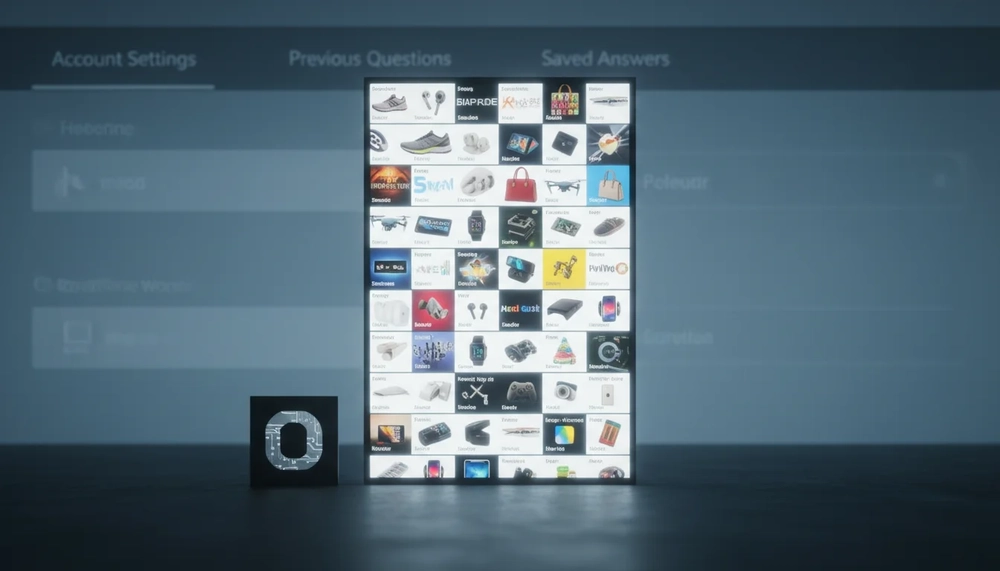
As of November 2026, a count of ads inside Google's AI answers says how busy a shopping category is, not how visible your brand is. Adthena found about 175,100 paid placements in Google's AI Overview and AI Mode panels in the United States in the summer months of 2026, with apparel and consumer electronics taking most of them. Teams that treat that figure as a reason to buy "AI ads" are working from the wrong number; the campaigns that produced those placements already exist, and the measure of your own standing in AI answers comes from a separate baseline. Anyone tracking generative engine optimization singapore results meets the same distinction in this market, where Google already serves ads inside AI Mode and AI Overviews. The sections below cover where the placements sit, how the auction admits them, and where a paid lead should look instead when the question is visibility rather than placement.
The figure comes from Adthena's Holiday AI Paid Search Report, covered by Search Engine Journal in November 2026. It counts placements on two surfaces at once, and it does not count clicks, spend or conversions on either of them. That limit is the most useful part of the report for a paid media lead, because it closes off the reading that a high category count means someone in your category is winning.
What the report counted, and on which surfaces
The headline number combines ads inside AI Overviews with ads inside AI Mode, both in the US, for one four-month window. The report split the total across five holiday shopping categories.
| Category | Placements in AI Overviews and AI Mode (US) |
|---|---|
| Apparel | approximately 111,000 |
| Consumer electronics | approximately 55,000 |
| Travel | approximately 6,500 |
| Beauty | approximately 2,100 |
| Toys and games | approximately 685 |
Two of the five categories carry nearly all of the weight. Apparel and consumer electronics are product-dense retail categories where shoppers ask comparison questions and where Google's answer pages have a reason to carry a sponsored block. The same report counted ChatGPT ad placements in the same categories and months: 204,489 in total, with apparel at 90,517, consumer electronics at 56,569, travel at 48,134, toys and games at 4,694 and beauty at 4,575.
AI Overviews also grew their own footprint over the year the report covers. In the US, appearances rose from 304 million to 575 million across the two Augusts compared, an increase of 89%. The UK and EU rose 160%, and Australia 536%. The report does not describe the queries behind those counts or say whether the query set stayed the same across both years, so the growth rate is best read as movement in exposure, not a forecast for any single vertical.
Why nobody has to buy an AI Overview ad separately
Google's own help page on ads in AI-powered experiences settles the mechanics. There is no AI Overview placement to purchase, and no separate campaign or budget behind it. Your existing Search, Shopping and Performance Max campaigns are already eligible to serve inside AI Overviews and AI Mode wherever those surfaces run, through the normal Google Ads auction.
Google's help page, which carries no publication date on the version read for this article, describes two matching paths. Ads can match directly to a query that already shows commercial intent, the way they do on a standard results page. They can also match contextually to both the query and the AI response when someone asks a longer, exploratory question and commercial intent appears in the suggested next steps. Exact and phrase match keywords only take part in the direct path; AI Max for Search, broad match, Shopping and Performance Max are eligible for both.
The controls an advertiser already uses keep working. Negative keywords keep applying, as do brand exclusions. The cannots are the other side of the same page: you cannot target only AI Overviews or AI Mode, and you cannot opt out of those placements separately from Search.
A separate Google announcement, published by Shashi Thakur, VP and GM of Google Search Ads, adds two changes. Multi-turn ads launched in the US, so an advertiser's ads can appear on follow-up queries inside AI Mode. Ads in AI Mode also scaled to ten additional countries: Australia, Canada, India, Kenya, Malaysia, New Zealand, Nigeria, Pakistan, the Philippines and Singapore.
That last item matters for anyone looking for a geo agency singapore to read these reports against. Singapore is on the list of markets where ads run inside AI Overviews and AI Mode. English is the only language the help page names for in-answer ads, so a Singapore advertiser writing in English is inside the scope of the report's mechanics even though the counts themselves are US-only.
One practical note for anyone planning a generative engine optimization singapore baseline: make the question list country-specific. A question that works in a US count may have no Singapore volume at all, and an answer sampled in one region does not describe the other.
How to tell whether you are already inside Google's answer pages
The check takes an afternoon and needs no new budget, because the placement is a by-product of campaigns you already run.
| Check | Where to look |
|---|---|
| Do you run Shopping or Performance Max campaigns? | Google Ads campaign list |
| Are those campaigns on broad match, AI Max or full asset groups? | Campaign settings and asset groups |
| Do your search terms include long question-shaped queries you never bid on? | Search terms report |
| Is your Merchant Center feed complete and current? | Merchant Center diagnostics |
| Does any report isolate the answer surface? | It does not; the metrics sit in aggregate |
The last row stops most audits. Google's reporting design puts answer-page queries into the same campaign and search terms reports as every other Search query, so a filtered view of AI Overviews alone is not available to advertisers. A team that expects to find one spends the afternoon looking for a setting that does not exist.
The same limit explains why a geo agency singapore audit usually starts with the account rather than the website. Eligibility, budget and match type decide whether any placement happens; the site decides whether the brand is cited afterwards.
A second push comes from the organic side. Pages that answer a question in full, name the product range accurately and publish price and shipping terms give an AI answer something to cite, which is why generative engine optimization singapore work normally puts those pages first.
The gap no vendor fills: AI answers have no separate report line
The Adthena report and Google's own documentation leave the same hole. Nobody publishes impressions, clicks or cost split out for AI Overview and AI Mode placements.
Google's help page explains why. Queries that trigger ads in AI Overviews and AI Mode are included in aggregate in your campaign report, where impressions, clicks, conversions and cost sit with all other Search traffic, and in your search terms report. There is no filter that isolates the answer surface.
The practical consequence is that a Singapore advertiser can confirm eligibility and cannot see the split. A rise in cost per click on a question-shaped query may come from the answer page or from an ordinary result. Nothing in the standard reports tells you which. Treat any agency claim of a clean AI-answer click-through figure with that in mind; Adthena counted placements, and placement counts are what a third party can see from outside an ad account.
What the prompt mix says about category behaviour
The report grouped ChatGPT ads by prompt type, separating research and discovery prompts (people comparing options or asking what is best, without naming a product) from prompts that name something specific. The split differs sharply by category.
| Category | Share of ChatGPT ads on research and discovery prompts |
|---|---|
| Beauty | 83% |
| Travel | 69% |
| Toys and games | 67% |
| Apparel | 48% |
| Consumer electronics | 42% |
The two categories with the most ad placements are the two where fewer than half the ads ran on research prompts. Beauty, with 2,100 placements in Google's AI answers, put 83% of its ChatGPT ads on research prompts. A category can therefore carry many placements while its buyers mostly ask narrow product questions, or carry few placements while its buyers ask open comparison questions. Google's help page explains why the second pattern has room to grow: in AI Mode, queries are on average three times longer than traditional searches, and longer conversational questions are exactly where contextual matching applies.
The Google announcement adds that click-through rates are similar between sponsored and organic product list items inside AI Mode, which gives a reason to care about the slot without saying anything about the ad count in a category.
For a retail advertiser this changes what to check in the account. In apparel and electronics, exact and phrase match keywords have less room to work inside AI answers than in a research-heavy category. Broad match, AI Max and Performance Max are the formats that can match an exploratory question. If those are not running, the placement counts in your category belong to competitors using them.

A fixed-sample reading of your own AI visibility
The report counts ads. AI visibility counts answers. Those are different denominators, and mixing them produces the most common mistake in reading this kind of data.
Being mentioned, described accurately and cited in an AI answer is the definition used in Topkee's GEO service, and the measurement needs four things fixed before any comparison: the question version, the engine, the language and the region, plus a sampling cadence. Mention rate then has a clear form: valid answers containing a brand mention, divided by valid answers collected under identical conditions. Source-appearance rate is computed per engine.
For a Singapore apparel or electronics retailer, that suggests a baseline running alongside the ad count, not after it.
| Question | What it needs |
|---|---|
| Are my ads showing inside AI answers? | The campaign report and search terms report, where those queries appear in aggregate |
| Is my brand described correctly in AI answers? | A fixed question set, sampled across engines and repeated at set intervals |
| Do AI answers cite my pages? | The same question set, recording which URLs the answer links |
| What the Adthena count measures | What a visibility baseline measures |
|---|---|
| Paid placements on two surfaces | Brand mentions in organic answers |
| Five US shopping categories | Your agreed question set, by engine and region |
| One four-month window | A repeatable sampling cadence |
| Nothing about clicks or revenue | Nothing about clicks or revenue |
Keep the commercial question in its own column. Ads in AI answers use the same auction and the same bidding models as Search, and Google charges nothing extra to take part. A placement in an answer is a paid impression, and the report under discussion tracks no clicks from those impressions at all.
Neither table converts into the other. A crowded category tells you that competitors buy into it; a thin category does not mean your brand is described well when someone asks about it.
Topkee publishes a worked example that it labels as illustrative rather than a client result, and the shape of the arithmetic is worth copying into your own sheet. A question set sampled over several rounds gives a pool of valid answers. Divide the answers that mention the brand by that pool and you have the mention rate; divide the answers that link the brand's own site by the same pool and you have the source-appearance rate. Both belong to that question set, that engine and that period, and neither can be compared with an ad placement count from another vendor.
Where the Topkee reading of this data stops
Topkee runs a GEO service built on a fixed question sample, with tiered monthly quotas of active tracked questions and of knowledge content writing. Prompt tracking, query fan-out analysis, a sentiment and brand-description check, competitor comparison, AI browsing analysis and article production all run inside that sample. The scope statement is narrow on purpose. The work improves brand mentions, source performance and the accuracy of the description inside the agreed question sample, and it does not guarantee search rankings, AI recommendations or sales. A third-party count of ad placements across five US categories is not an input to any of those numbers, and Topkee holds no Adthena data of its own.
Topkee Media runs the other half of the account: Search, GDN, Performance Max, YouTube and remarketing management for advertisers, with TTO tracking on conversions. That is the practical owner of the Shopping and Performance Max campaigns Google's help page says are automatically eligible inside AI Overviews and AI Mode. Topkee's four-layer reporting keeps AI visibility in a separate layer from traffic and from commercial results, and GEO Insight, with the same active question quotas, shows brand ranking, visibility, competitors and cited sources inside AI answers. Topkee Singapore Company was set up as part of the group's internationalisation, which is why the Singapore list in Google's announcement lands in the same reporting structure.
That split is where the measurement and market footprint becomes useful. The ad placement record belongs to the account team, the visibility record belongs to the question sample, and the commercial record belongs to the client's own CRM. Keeping them in three places stops a busy category count from being mistaken for a performance result.
The reason the two records stay apart is mechanical. A placement in an answer is bought, labelled Sponsored and billed on the same auction as Search, while a citation is the organic answer linking a page it used. Google states that buying ads does not influence the organic response.
A category leader in ad placements can still be missing from the answers themselves, and a small advertiser can be cited repeatedly without ever winning the sponsored slot. The two records answer different questions, and neither substitutes for the other when a budget decision is on the table.

A checklist for this week
- Open the campaign and search terms reports for your Shopping and Performance Max campaigns and look for the long, question-shaped queries you did not bid on by keyword.
- Confirm whether broad match, AI Max or Performance Max carries enough budget for contextual matching on exploratory questions; exact and phrase match keywords do not reach them.
- Check Merchant Center feeds for descriptive titles, multiple images, current prices and clear shipping and returns text, since Shopping ads are what render inside the answer.
- Write down a fixed list of buyer questions in the words your customers use, fix the engine, language and region, and sample them once as a baseline.
- Record whether your brand is mentioned, whether the description is accurate, and which pages the answer cites, before anyone changes a campaign.
- Compare the two records separately: ad placement in the answer and citation in the answer.
The one-page version for a budget meeting
| Question a manager asks | Source of the answer |
|---|---|
| Are we visible in Google's AI answers? | The fixed-sample baseline, by engine and region |
| Are our ads eligible there? | Google's help page: Search, Shopping and Performance Max are eligible |
| How much of our spend went to AI answers? | Not available; it sits in aggregate in the standard reports |
| Are we cited in the answers? | The baseline's source-appearance record |
| Does the Adthena report apply to us? | Only as market context; its counts are US placements |
Where to start on your own GEO baseline
If your ads are already eligible and you still do not know what AI answers say about the brand, the next step is the GEO service page, where the question-sample method and the monthly tiers are set out, and where the scope of what it can and cannot move is stated on the page.
For the paid side, settle first whether broad match, AI Max and Performance Max carry enough budget to reach exploratory questions at all. Exact and phrase match keywords do not, and no amount of content work changes that.
For the organic side, the first useful artefact is a written question set with a fixed engine, language and region, sampled once before anything changes. Both records then sit side by side in the same review, and a Singapore team reading the next vendor report can tell which numbers describe its own brand and which describe the market.
FAQ
Are there separate campaigns I need to buy for AI Overviews or AI Mode?
No. Google's help page states that existing Search, Shopping and Performance Max campaigns are automatically eligible to serve in AI Overviews and AI Mode, with no new campaign or budget. Ads use the same auction and bidding models as standard Search.
Can I target only AI Overviews or AI Mode, or exclude them?
You can exclude them only by excluding Search itself. Google's help page says advertisers cannot target AI Overviews or AI Mode exclusively and cannot opt out of those placements separately from Search. Negative keywords and brand exclusions still apply.
Does a high ad count in my category mean competitors are beating me in AI answers?
It means more placements were counted, not more conversions. The report tracks no clicks, spend or conversions on either surface. Paid placements also do not influence the organic AI answer, which Google generates independently of the ad auction.
Do I need a different measurement setup for AI answers?
The ad side is already in your standard reports, where AI Overview and AI Mode queries sit in aggregate. The citation side needs its own baseline: a fixed question set, one engine at a time, repeated at a set interval with the language and region held constant.
Why does Singapore matter for this report?
The counts are US-only. Singapore appears on Google's list of markets where ads in AI Mode are scaling, and on its help page's list of countries where ads run inside AI Overviews and AI Mode in English, so the mechanics apply to local campaigns even though the counts do not.
What is the difference between an ad in an AI answer and a citation in one?
An ad is bought through the auction and labelled Sponsored. A citation is a link the organic answer makes to a page it used, and Google states that buying ads does not influence the organic response. One is a placement, the other is earned visibility.
Sources
- "Ads In Google AI Answers Concentrate In Apparel & Electronics", Search Engine Journal, 2026-11-05. https://www.searchenginejournal.com/google-ai-answer-ads-apparel-electronics-report/595984/
- "About ads in AI-powered experiences in Google Search", Google Ads Help, undated. https://support.google.com/google-ads/answer/18826097
- "Ads in AI Mode expand to new markets", Shashi Thakur, Google Ads & Commerce Blog, undated. https://blog.google/products/ads-commerce/ads-in-ai-mode-global/

Article Author
Pang Sir